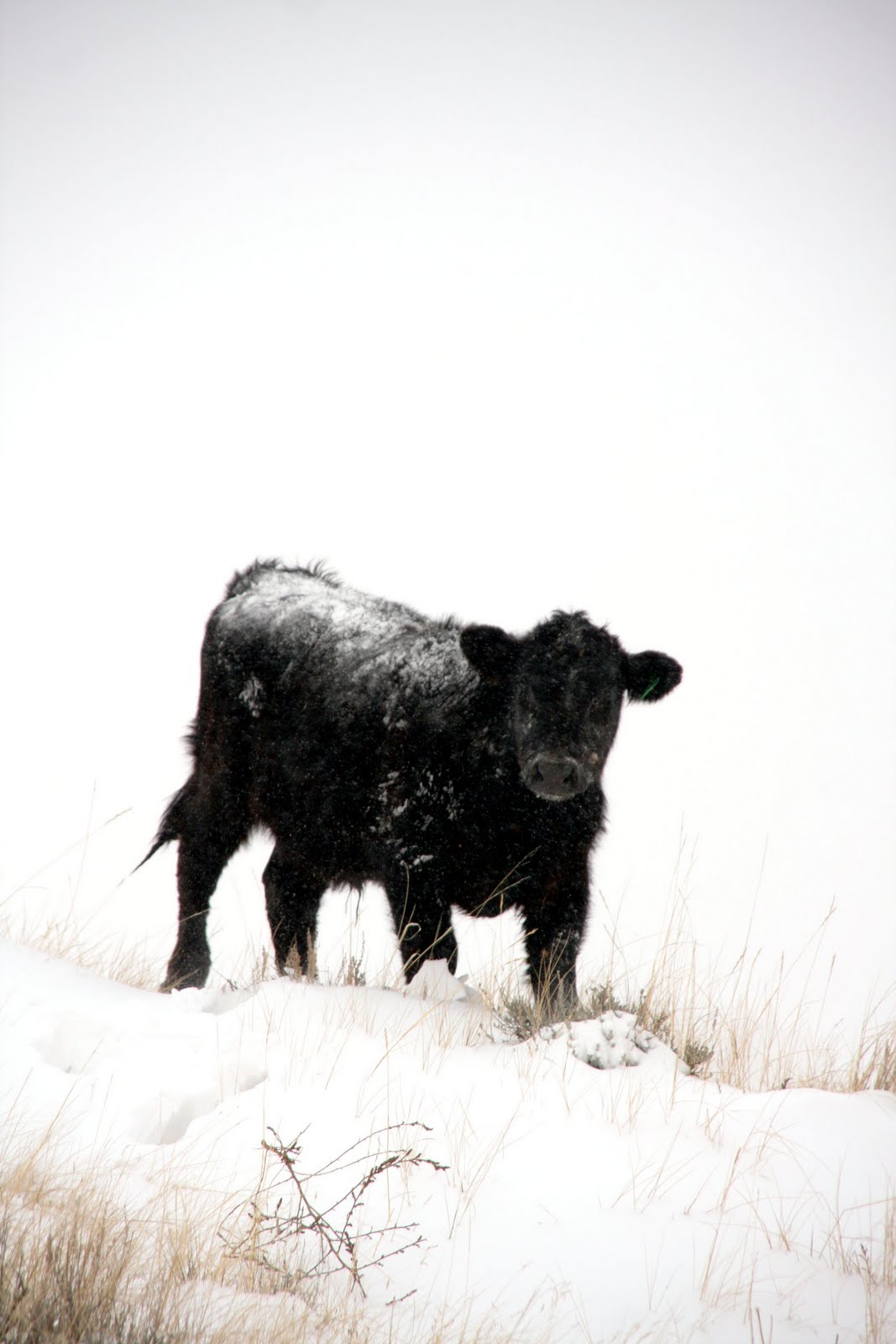
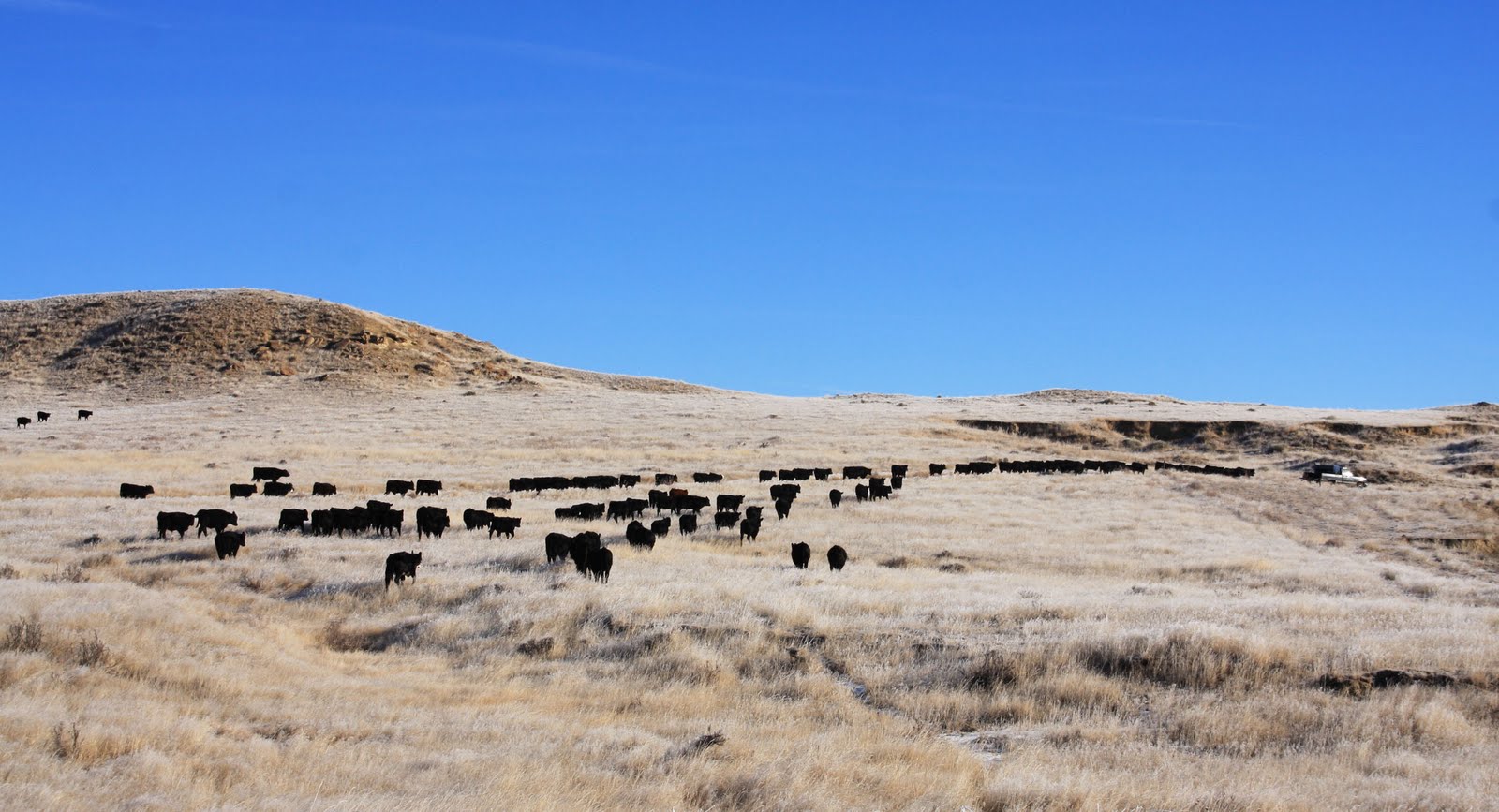
Cattle are moved to different pastures throughout the year to maximize the utilization and regrowth potential of grass on the operation. How people graze their pastures varies drastically from place to place depending on the types of grass, weather, terrain, soil and any number of other varying factors present on their land.
The idea with grazing is to provide adequate nutrition to your livestock to meet their growth or maintenance needs, while also maintaining or improving the quality of grass, so you can use it again the following year. If you do a poor job managing your grass, it will directly impact your livestock, because they won't have enough feed to grow or maintain. Ranchers are experts at grass management, due in part because their livelihood depends on it.
 This time of year a lot of cattle are being moved to their summer homes, where they will graze pastures that have been untouched since last year in most cases. We started by gathering the steers out of a smaller pasture where they have been for a week, waiting for this day when they will head for their summer home.
 Yearlings are very curious, energetic creatures, and this often results in some funny, and sometimes not funny, situations. We often compare them to teenagers, as they have several personality similarities.
 As we gathered, my cousin and I held the bunch up near the gate we were heading out. The yearlings promptly surrounded both of us, bucked and kicked, sniffed our horses, and stared at us. Cows generally don't show this behavior, and would be farther away from our horses, and not as interested in us.
 Another difference is you follow, or push, cows. But, sometimes with the yearlings being so curious they happily follow you, and that makes them very difficult to push and turn. So, on this day my horse and I became the leaders, and this was taken over my shoulder as we headed for the first gate, and the yearlings eagerly trotted along behind.
 Through the first gate we were prepared to stop, or at least slow down and stear, the yearlings if they had taken off. But, this year they simply started grazing, then would jog off a little, then graze again.
 Here we go, jogging off. It also started raining right as we came through the gate, and that is why some of these photos have rain spots on them. At this point we all took turns putting on our rain gear. There are leather straps, called saddle strings, on the back of saddles that are designed to hold equipment, such as rain coats, and we all had ours with us.
 We all got suited up, while simultaneously heading the yearlings in the right direction.
 We headed across a field to the second gate, which took us onto the neighbors. My uncle asked his neighbor's permission to trail across them, and having good neighbors is a great aspect of ranching in both his and my family's locations.
 We went across the neighbor's alfalfa field, across the creek, and headed up a hill.
  It was a total of 12 miles from start to finish with this trip, and after the first couple miles the yearling settled down and started stringing out. We were very thankful for a cool day, as that makes trailing much easier on the cattle.
 Through the next gate we headed into some rougher country, with some trees.

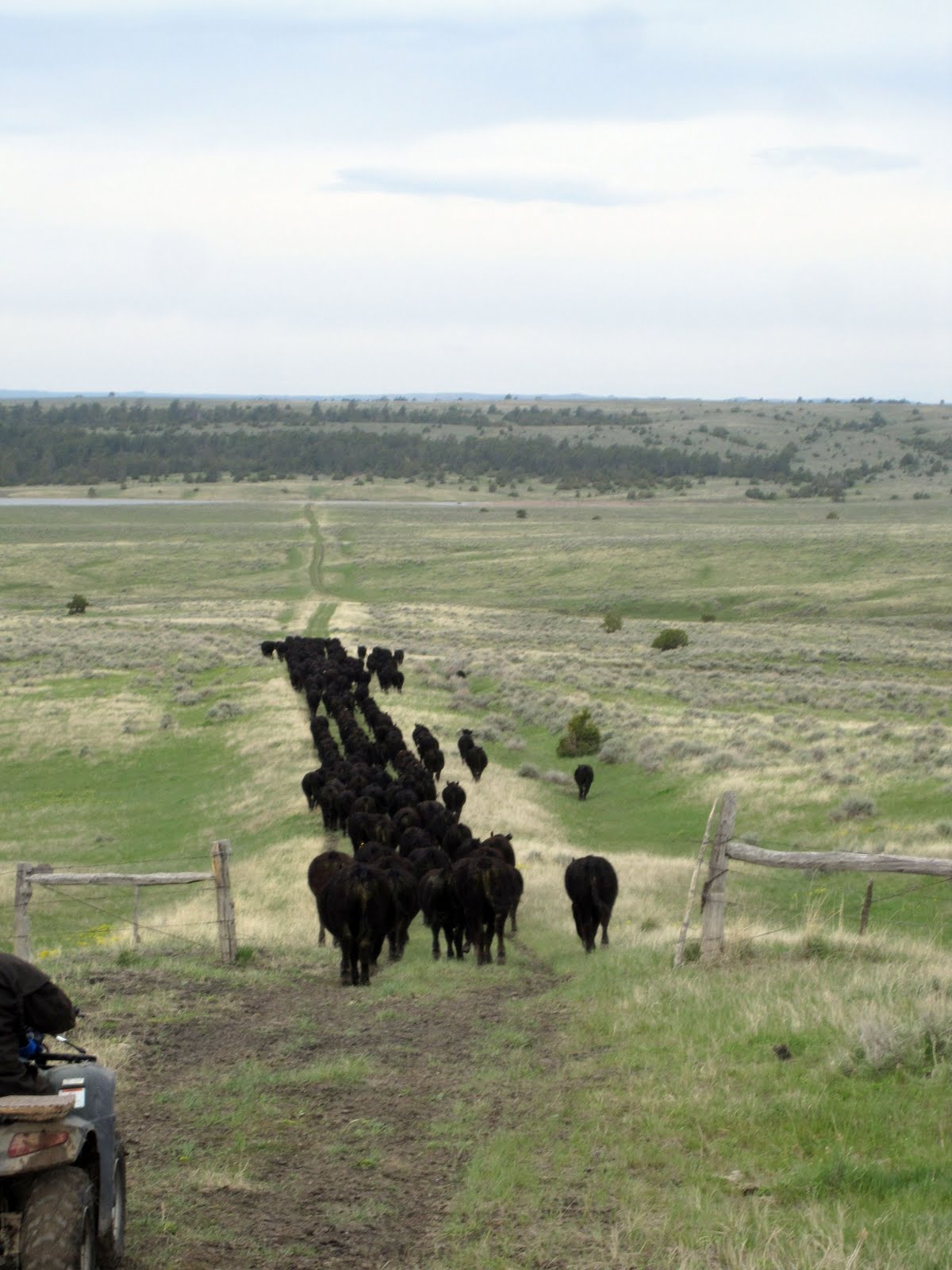 We headed back out into some relatively flat country, and they strung out and headed down the road. We stuck with the road a while, then continued cross country. While you can't see them in this picture, two people are riding toward the front of the herd, one on either side of the bunch, to steer the cattle. We had to trail this bunch around various reservoirs, through gates and among trees, and turned them different directions when necessary to make the route as easy as possible for them and our horses.
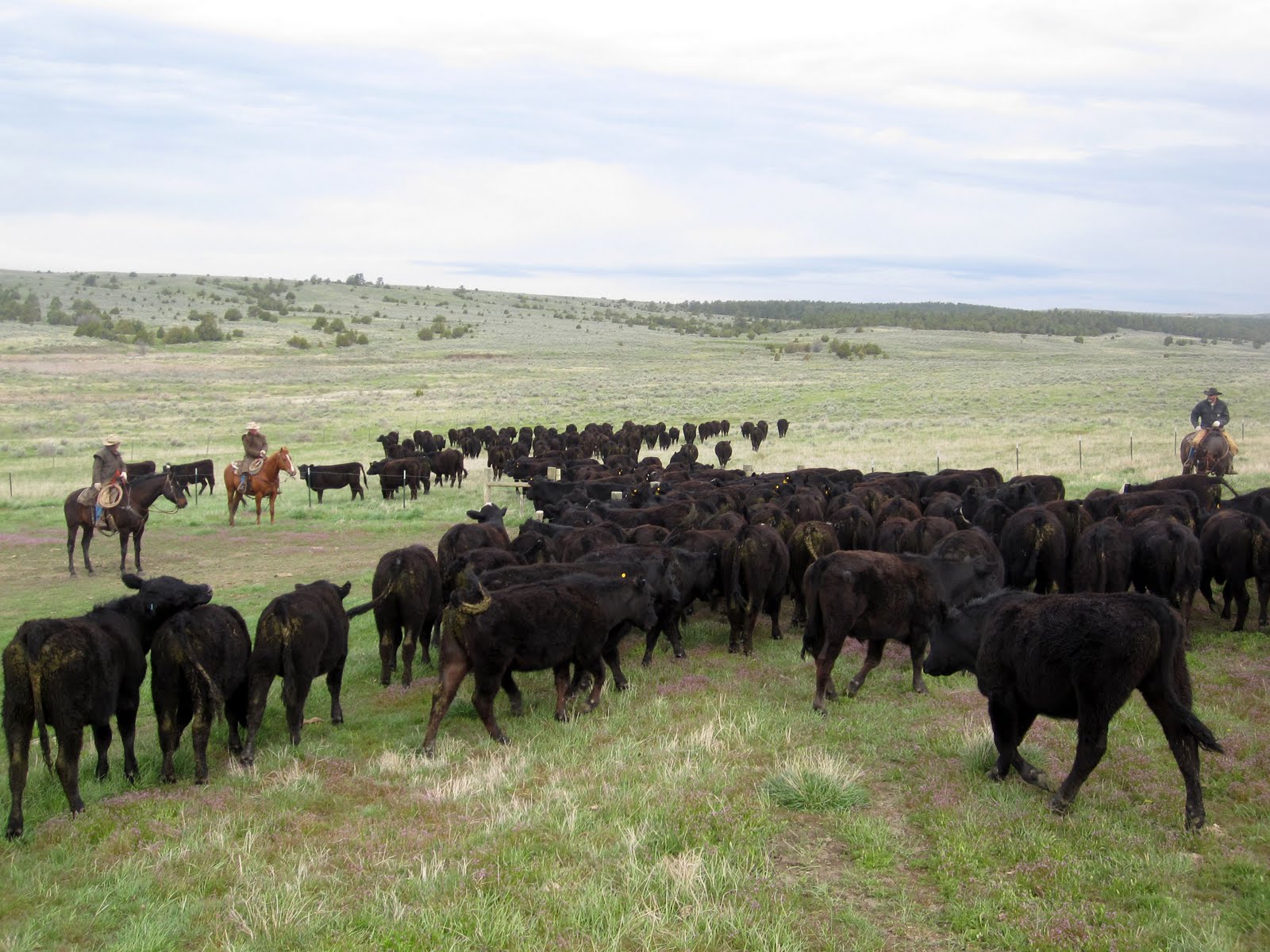 Here we are going through two gates. The top of the horizon in this photo was the halfway point. We stopped there, where there was a corner in the fence to hold the cattle, and my aunt brought out the hot coffee and rolls she brought with her on a 4-wheeler. It was cold and windy, and we appreciated the warm beverages. Had it been hot, the stop would have been to let to yearlings rest and cool off. But on this day it was more for us to warm up.
 After a brief coffee break, we all got back on and continued on our way.
 All the wonderful rain this spring has resulted in lots of puddles and standing water.
  After going 12 miles through alfalfa fields, pine and ceder trees, sage brush, steep hills, flat country and rolling hills, we approached our destination. My uncle rode ahead to open the gate and prepare to count the yearlings in. Counting of livestock is done a lot on ranches - it's important to know how many cattle you have in different places. This knowledge lets you know if you lost any while they were in a pasture or if you missed any gathering, among other things.
 We worked at making the steers walk single, or double-file through the gate, so he could get an accurate count on them. A lot of teasing and joking can be associated with counting, and getting the count right, at our place.
 Then someone (my cousin in this case) gets off and closes the last gate. We started just this side, and to the right, of the farthest, black hill.
 Then we leave the yearlings to gain and grow at their summer home. My uncle has put his steers in here before, and as I mentioned at the beginning, he manages his grass so the pasture will be as good, or better, than the year before. You can see the old (grey) grass from last year that he left. This old grass was allowed to go to seed, and it caught moisture in the winter that soaked in and helped germinate this year's grass. It also provided food to a number of wildlife species, even after he was done grazing it, and provided cover for the land, and discouraged weeds from growing.
I also mentioned that different places grow different kinds of grasses, which provide more or less nutrition to cattle. This area will result in good quality yearlings gaining over two pounds a day. To give a comparison, yearlings on grass an hour south of were my family lives will gain over three pounds a day in some cases.