Showing posts with label weaning. Show all posts

Wednesday, September 12, 2012

Early Weaning

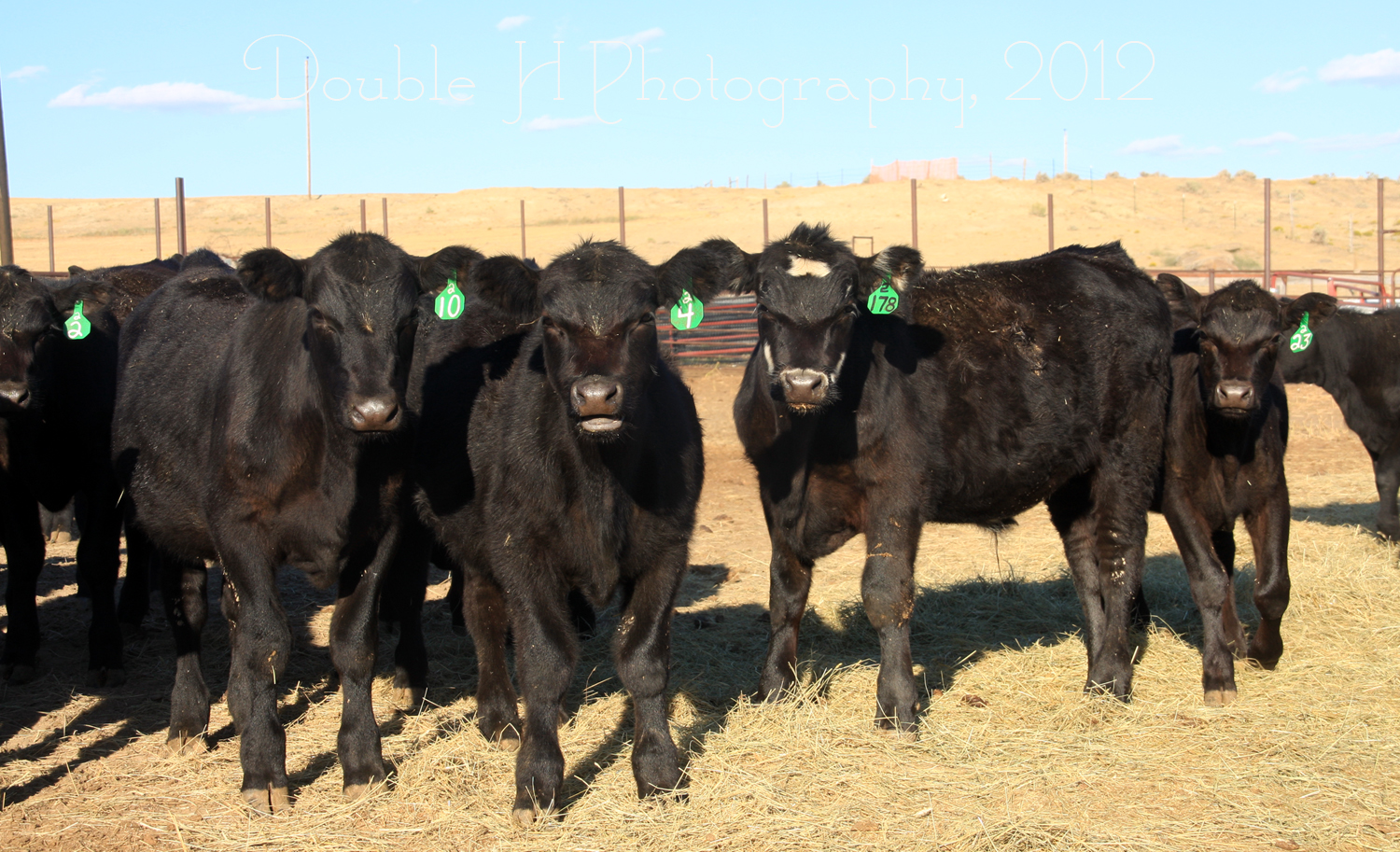
Weaning our heifer's calves early had me fairly nervous. It was 102 degrees the day following weaning, and 103 degrees the day after that. I was sweating from more than just the heat as our light calves kicked up dust and bawled around the corral. But, although the dust never settled, the cattle did. So far, this has been one of the easiest weanings I can remember. Not one calf has been treated for sickness, they're eating and gaining like crazy, and are calm and relaxed.
These calves were taken off their mothers over a month earlier than we normally would due to the drought this year. Weaning early will allow their mothers to switch from using energy to make milk to using energy to put on condition before winter sets in, and in maintaining their new pregnancy. My dad said he can't remember ever weaning in the middle of August before.
Weaning is one of those ranch practices that is very unique on each operation. What works for one guy may not for the next due to differences in environment, weather, cattle, facilities, disease history and the number of people available to help. Here's what we did this year.

First, we do not precondition, or give any weaning shots. All these calves will be given is a 7-way booster a couple weeks after they're weaned to prevent them from contracting Blackleg. This is a pretty unique management practice, and we are able to do it successfully in part because disease is rare in our area and our cattle are not co-mingled with anyone elses. We do have a complete health program for them, and that is covered further on in this post.
When we wean, it occurs at a corral located a few miles from our house. We sort and load the calves onto our cattle pot, haul them home, and unload them. This means the cows are bawling at a set of corrals far enough away they can't be heard by the calves, and vice versa. Instead of looking for mom, we've found the calves settle down and go to eating faster than when we had the cows right outside the corral.

Keeping the calves full is among our top priorities. They are locked in a smaller pen, shown in the top photo, for the first couple days to prevent them from walking. Walking is when the calves get to walking (as if that wasn't self explanatory) around the corral. Pretty soon they're all worked up, and possibly running, instead of settling down and eating. Walking is bad, and can result in the corral being torn down, increased sickness, reduced feed intake and gain, and higher anxiety levels in the calves. These are all the opposite of what we are trying to accomplish as we wean.
After they're over the initial surprise of being weaned, and we deem they're ready based on extensive observation, we open up the corral and they're given access to a much larger area. Within this area are two bottomless feed bunks we keep full of ground grass hay. They also have access to two round bale feeders from their smaller pen, also full of grass hay. If calves are eating, they aren't thinking about mom as much, and when calves are eating they're going to be gaining. We want to get them gaining as much and as fast as possible; as ranchers we always sell pounds. Plus, full calves are happy calves, and we want them to be happy.


 Every morning we fill the bottomless bunks. Just this week we had to start filling them twice a day because the calves are starting to eat a lot more. As you can see they like to eat and aren't bothered by the loud tractor and hay buster. Feeding time is also when we walk through and observe the calves for any potential problems, concerns or issues. Diligent observation can convert a potentially major issue into a minor concern a lot of the time.


 We also feed lick tubs with our hay. These in the blue plastic containers are supposed to be a special weaning tub, but somehow the order was messed up and we got calving tubs instead (????)


 Here's the ingredient list. Different tub varieties will have different ingredients, and levels of protein, fat, fiber. etc... All tubs provide a lot of vital nutrients and energy, and these (as in, the ones they were supposed to be) are added to the calve's ration to compliment the hay they're also consuming. We are currently switching from these to another, regular calf tub that comes in a cardboard, completely biodegradable tub. If I had the right two labels to compare, I would tell/show you the differences between the two.


 Then there is the water, which is always a critical factor of any ration. Lots of readily available, clean water is essential at all times on our operation, and weaning is no different. The foam is the result of a treatment we put in the water, shown below.


 We add powdered tetracycline, and Corid, to our calves water for health reasons. The tetracycline is a bright yellow powder, and the Corid is a liquid.


 Here is the tetracycline label. We add this to a cistern for a set number of days to prevent respiratory problems (pneumonia) in our freshly weaned calves. In some ways, this combats the same issues that a weaning vaccination program would. In case you missed it, each tub of this costs about $85, and we have to add multiple tubs to the several thousand gallons of water the calves will drink during their time on this. It's not cheap.


 Here's the Corid label. This is used in an attempt to prevent coccidiosis, which can be a very serious and fatal problem in our area. We are doing the 21-day treatment this year. These bottles cost between $95 and $110 each, and so far we've gone through over a half dozen of them. Again, not cheap, but worth it to keep the calves healthy.
We add both of these to a 7,000 gallon cistern, which we've calculated out to gallons per foot. We've also calculated how much of each additive we need to add per foot of water. This way we can turn on the cistern, add the proper amount of Corid and tetracycline, let it fill up a foot, or two or three, then turn it off and have everything mixed and ready to go. A "story pole" is how we measure the depth of the cistern. I know, almost to the minute, how long it takes the well to pump a foot of water into the cistern.


As I mentioned before, so far this year our system is working like a champ. The calves are happy, full and healthy. Nothing better than seeing a corral full of calves lounging around chewing their cuds!

Wednesday, August 29, 2012

A heifer in the basement


Weaning is a stressful time. It is also an excellent time to locate, tear out, and immediately rebuild the weakest part of your corral some years. Freshly weaned calves are experts at the locating and tearing out part, and a stressed, mad rancher can really replace torn down corral fast.
The above photo is the result of one such experience a couple years ago. Weaned calves can be spooky, and just about anything can set off the right bunch. One morning we woke up to the sound of peaceful quiet, which is never a good thing on the second day of weaning, and also probably why we were all actually sleeping well.
The corral was empty. This is a rancher's worst weaning nightmare. If calves don't know where their mothers are, they will just poof in every direction like a dropped bag of flour. Locating, gathering, and temporarily securing them until you rebuild the corral can be a lengthy and frustrating process. It can take months to find them all in some instances.
But, not this time. Our calves had gone half a mile, settled down, and were eating. We easily gathered them up, locked them up, fixed the corral, and considered ourselves lucky to only be short one head. I spent the next two days searching high and low, near and far, for the missing one. I eventually assumed she had met up with a neighbor's cows, and we would eventually get a call to retrieve her.
Then I saw what you see above while putting garbage in our burn barrel, and immediately took a picture so everyone would believe me when I informed them of where the missing one had been hiding for almost three days.
This old basement is just a junk collector, as you can see (with the exception of the heifer of course). How she fell in there is beyond me, and how to get her out was also beyond me at the time. She was not happy, to say the least, about her predicament. I pondered, thought, weighed options, and eventually gathered up what I thought I needed to assist her in jumping out of the lowest part of the wall, which is in the top left hand corner of the photo.
I loaded a 4-wheeler trailer of railroad tie chunks and cinder blocks and dumped a few into the basement to begin constructing a temporary set of steps. The heifer began lapping the basement, and I stepped over to the opposite side, just in case she managed to jump out. To my surprise, she lined herself out and leaped out of the basement with ease. After three days of searching, some heavy lifting and mental planning, that's all it took to get her out and back with her buddies. She was shrunk out, hungry and thirsty, but otherwise none the worse for wear as a result of her stay in the basement.
When I came across this picture again today, I thought it was fitting to share with you on day two of weaning our first bunch this year.

Tuesday, August 28, 2012

Photo update

Here are a few shots of what's been going on around here the last week.
 
We weaned yesterday, and it's 101 degrees today. Earliest and hottest round of weaning that I can remember.


We pulled bulls. Not this one, he isn't ours. But I thought he made a nice picture sitting under his own private tree, swatting flies and watching traffic.


 Here are our bulls, getting their pecking order re-established for the winter.


 And here they are about to continue their argument from the previous photo after we showed them where the water is.


 My wonderful grandmother turned 90. Here she is with all her grandchildren. The weekend before her party, we threw a surprise party for my mom. It's been an August of celebrating around here : )


I finally saw a part of the fire that burned to within a half mile of my aunt and uncle's home, and was much closer to some of their neighbors homes and buildings, as you can see here. This fire burned over 63,300 acres in the Black Hills of northeastern Wyoming.

Wednesday, January 25, 2012

From Start to Finish

Perhaps you've heard that it takes a long time for ranchers to raise the product we sell, which in our case is beef. This post covers the timeline from start to finish for you. I realize some of the photos aren't my best - I wasn't planning this post for the last two years, and my photography has improved since 2009. My hope is to follow this post with one of photos of our calves over this same time period, so you can see how they change and grow.

 Today I am showing you the timeline for the steers we sold in September, 2011. We started planning for them in June of 2009, when we turned the bulls in with our cows. This was the first time we managed specifically for the following year's calf crop.


In late 2009, we poured all our cows for parasites, and preg checked them. All pregnant cows were kept, and given a shot to protect their pregnancy. We fed them every other day all winter to ensure they had enough energy to produce a healthy calf and stay healthy themselves.


Nine months after we turned the bulls in, around late March and April of 2010, the calves were born. We were still feeding at this time because the grass hadn't turned green yet, and the cows were using more energy to produce milk for their calves.
When born the calves weighed between 70 and 80 pounds.


In May, 2010, we branded all our calves, castrated the bull calves, gave everyone an ear tag, and a shot to protect them against common diseases in our area. Then we turned them back out with their mothers on grass for the summer to grow.


Around October 1, 2010, we gathered all our cows and calves back up, and weaned the calves from their mothers. At this time we kept them in the corral for a few days and monitored them closely for sickness. Then we turned them back out on grass, and fed them cake and hay for the winter. Our calves weighed between 500 and 525 pounds when we weaned them.
Lots of ranchers where I'm from market their calves at weaning, or in the months following. Theirs may weigh more than ours at that time because calves are sold by the pound, and ranchers work hard to make as much money as possible, as all good business people do.


Winter, 2010. Here is a photo from feeding over the course of the winter. We fed them every other day, and checked their water every day.

 
We also weighed every calf when we weaned, and again in January, 2011 to determine how well each calf was gaining. During the second weighing, we sorted the heifers from the steers and turned them back out in separate pastures.
In early 2011 we also bangs vaccinated all our heifers, which is required by law for all replacement heifers (those we kept for breeding)
In March of 2011 the calves were one year old, and weighed between 600 and 700 pounds. Around this time (there's no set date) they went from being "calves," to "yearlings."

In May, 2011, we poured our steers for parasites, counted them and hauled them to their summer pasture.


In June, 2011, the heifers were turned out with a bull for the first time.


Meanwhile, the steers were happily grazing and gaining on grass for the summer.

 
Then, on September 17 we sold our steers after managing and working with them for 26 months. They weighed just under 1,000 pounds, and went to a feedlot to be fed a high energy diet for a few months prior to entering the food chain.
We received our one and only paycheck for the steers on that day too, after carrying the expense of growing them for those 26 months. During the time we owned them, we saw them almost every day, and never went more than a week without checking on them for their entire life.
Their sisters will take another two years to start earning income, when we sell their first calves. That's four years of time and money invested prior to seeing any return. Now, I don't want to you think I'm complaining, because I love and enjoy what we do. I'm just explaining.
Ranchers all love what they do for the most part. People who are just in a profession for the money don't typically choose this one. It takes a certain mindset and love for your work to put an animal's well being before a regular paycheck. This is also why you'll often hear ranchers call our profession a lifestyle - because it transcends the definition of a job regularly.


So, to recap quickly. We started in June of 2009, when we turned the bull in with the cows.

Nine months later the calves were born.

And a year and half after that, we sold the steers.

Tuesday, November 1, 2011

Doctoring Calves

Weaning calves is much like sending your kids back to school in the fall. Between completely changing environments, tossing them into a smaller space, switching up their diet and any number of other things, some are bound to get sick regardless of your best efforts to prevent it. When I say sick, I mean anything from Pneumonia, to Pink Eye, to Foot rot, to any number of other ailments, depending on location, weather, soil and other variables. "Sickness" is an all-encompassing term.
People doctor calves in more ways than you count, and for a wide variety of ailments depending on the year, their location, and other things. Some rope and doctor them in a lot or pasture, others bring them in and put them in a chute. Some use horses and others use 4-wheelers or motorcycles. Some sort them off into a separate pen, others don't. Different people, and places, deal with different sicknesses. This is one of those ranch things where there are lots of ways to do the job effectively.
This year ours have been in our corral and a small lot. This increases the odds of them getting sick, because they're in a more confined space and were eating out of feeders, which can increase the spread of sickness. However, having them close also makes it easier to get them on a feed program, simpler to check and doctor them if they do get sick and can allow you get on top of any serious illness really fast. There are trade offs to having them turned out, or in a lot or corral like we did this year.
Before you can doctor any calves, there have to be some that are sick. Obviously everyone would prefer if they didn't get sick, and works really hard to prevent sickness before it starts. There are lots of things ranchers do to prevent sickness, including vaccination programs, adding a mild antibiotic to the water for a select period of time, feeding medicated feed for a period of time, feeding a weaning specific feed or feed additive, and a variety of other feed and management options.
For the most part, these practices are highly effective where I'm from, and we doctor very few calves. But, regardless of our best efforts, there are always a few, and some years a lot, that require additional care. As with most things involving livestock, they get sick at any time of day, and you have to spend a lot of time with them during the days following weaning when they're most likely to get sick. The key is to get on top of any sickness as fast as possible. If you miss the beginning of a wave of illness going through a bunch of calves, it can result in the duration of illness lasting much longer, costs you money in loss of production and medication costs and also increases the risk of calves not fully recovering from an illness, or dieing.

Healthy calves look like the above two photos. They're alert, with their ears up, eyes bright and bellies full. The guy just laying there is chewing his cud, a sure sign of contentment in cattle. There are lots of subtle, and not so subtle, signs of calves that are healthy, or on the verge of getting sick.

You want to look through them carefully, especially if you know you have something going through them. Number 166 looks healthy, alert, full, etc...

But, unfortunately one of the things we had go through our calves this year is Pink Eye.
Even though this guy doesn't feel sick, he needs doctored because of his eye.
Here's another suspect, this time for being sick. This guy is not alert, he's off by himself, and he's not eating when most of the other calves were - all signs of potentially needing doctored.
But, before you just go ahead and doctor every calf that looks like this, it's also important not to over-doctor. You have to spend time with the calves, and watch suspects like this guy. There are some that are obviously sick, and there's no doubt that you better doctor him or he's going to die. Then there are more "suspect" types, which need monitored. Sometimes it's easier to tell the difference, and sometimes you have to go with your gut (which for most ranchers, is based on years of personal experience) and what you feel is best for that particular animal.

Here's what we use to doctor. The artwork is custom. We use this old chute because it's pretty much worn out, and useless for anything but doctoring sick calves. It's also a manual chute, whereas our other one is run on hydraulics. Using this one means we don't have to fire up a pickup every time we want to run a calf in and doctor him, and one person can do the entire process alone if they need to.
When you doctor a calf, you usually give him a shot, in a syringe like this one.

We use a broad-spectrum antibiotic, seen here. The brand name of this bottle is Oxymycin, but the general term for this medicine is LA 200. You give calves so many cc's based on body weight. This is a mild medicine that treats a number of common illnesses and is affordable. It's usually a good starting place when doctoring calves. People in some places have to deal with illnesses that require much more aggressive doctoring, but fortunately that's not the case where I live in most instances.

You can give the shot under the skin, and we give multiple shots to spread the medicine out. For Pink Eye, you can also give the shot in the eyelid. But, considering I was doctoring most of these calves alone, I wasn't about to try to mug each one's head and give what would be a very difficult shot at the same time. So, instead of an actual shot, I would fill this little syringe with LA 200, and apply some of it directly to the eye. Pink Eye is extremely susceptible to doctoring, and the direct contact of the LA 200 to the infected area (eye) increases effectiveness. That's why they recommend a shot right at they eye also.

I didn't get a photo of doctoring any calves this year, but here's an example of my aunt giving a shot. She's going to give it in the neck, and you also want to be careful not to break the syringe (the clear part is glass), and waste the vaccine. She was giving a shot to some cows, and that's why it's white. LA 200 is the color and consistency of maple syrup. It's sticky, thick, and some brands burn when you give the shot to the calf. But, it's also fast and long-acting, effective, and a much better alternative to not being doctored.
Then each calf gets a mark with a paint stick, so you can tell he's been doctored after you turn him back out. Sometimes you have to doctor calves multiple times, and you need to know if he's been doctored previously. If you doctor a calf multiple times, you can switch colors each time. This year we used one color (pink) for sick calves, and another (yellow) for those doctored for Pink Eye.
We also write each calf we doctor down, along with the date we gave it a shot, and this year whether it was a sick calf or one with Pink Eye. We keep records of practically everything.

Lots of people just put a mark across the shoulders. I added another on their hip because when they were eating in the feeders, there were times when you couldn't see the shoulders.

The paint stick marks fade over time. Here's the first calf that was doctored for Pink Eye. At this point we're pretty much past the post-weaning sickness, and I turned the calves out to pasture this morning.

Monday, September 26, 2011

Fall Scenes

Here are a few pictures I took over the weekend. A couple were taken near or after sunset, and I enjoyed plyaing with my flash to capture fall colors at dusk. Hope you had a wonderful fall weekend too!