Showing posts with label gathering cattle. Show all posts

Tuesday, October 15, 2013

The Atlas Blizzard in photos

A week ago we were dealing with the images below firsthand. Tuesday was the day of riding, searching, counting the living and tallying the dead. It was awful. One week later we are doing better. The initial emotional shock is wearing off, my husband and I are both holding colds fairly at bay and everyone is making headway toward recovering from this disaster, with full knowledge that we still have a long road ahead of us.
 

 One of my husband's cows that didn't make it as well as a couple calves belonging to a neighbor. Beyond them are some of the cattle that survived the storm.


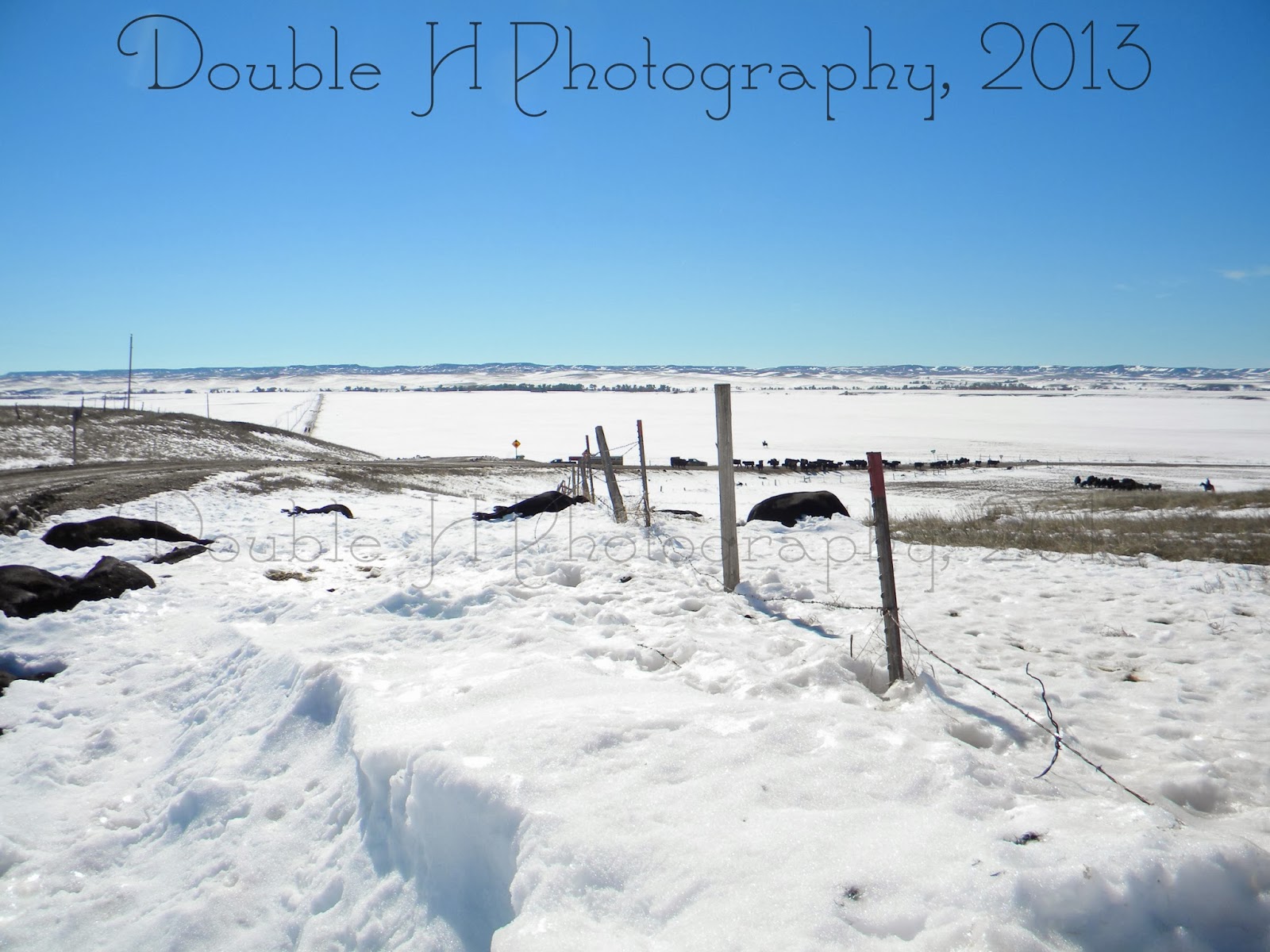
 The scene on the fence line to the pasture our cattle were in prior to the storm. The majority of these animals are not ours, and our living cattle can be seen trailing up the road and back to their pasture. There is one of my cows in this area though, dead because she would not crawl through the fence with the rest of our herd.


 Everyone helped everyone, and shown are some of our neighbor's calves, which we put with our cattle and fed this week. The poor guy crawling through the fence was not all there mentally after his experience in the storm.


 My sister-in-law and I rode in search of our yearling heifers, counting and trailing everyone we found back home. These got out when a power line pole fell on the fence and they drifted over it. As you can see the ground didn't freeze and dealing with the deep mud was a big problem in getting around to check on animals, as was the deep snow on top of the mud.


The guilty power line pole. If not for it, we may not have lost any yearlings. Or, what we did lose may have been in a pile on this fence along with all you see alive in this picture.


This heifer was alone, stuck in the corner of a pasture by a winding creek filled with snow. Every time we drove her out to this corner, she headed back into the trees to stand in the same spot on the creek bank.


When my sister-in-law finally got off her horse to walk the heifer out, she found the reason behind her returning to the same location. All her buddies, and our missing count, were in the bottom of the creek.
This is a heifer we found buried in snow, but still alive! She is basically sitting on her butt, to give you an idea of how deep the snow was in this location.


These were not as fortunate.


 The gardener snake we also found partially buried, but alive.


 My father-in-law headed to the trees and creek where the buried alive heifer was located to help pull her out. Then she was carried in the tractor bucket to higher, dryer ground and propped up against a hay bale.


Carefully loading her up.


 My parents brought their feed pickup. loaded with food, water, a generator and a 4-wheeler, and helped us for two days. We are so blessed to have such amazing parents and families!


 Me, taking pictures for insurance and work purposes. This is next to the creek where our missing yearling heifers were found, including the one still alive.


At the end of the day, we were all worn out, including my sister-in-law and I, but it helped knowing for ourselves where we stood, what shape the livestock were in, and being able to move beyond the worry and concern of not knowing.
For those interested in learning more about the blizzard, who have questions regarding why we lost so many cattle, or who want to contribute toward helping those impacted, here are some additional links.


Wednesday, August 29, 2012

A heifer in the basement


Weaning is a stressful time. It is also an excellent time to locate, tear out, and immediately rebuild the weakest part of your corral some years. Freshly weaned calves are experts at the locating and tearing out part, and a stressed, mad rancher can really replace torn down corral fast.
The above photo is the result of one such experience a couple years ago. Weaned calves can be spooky, and just about anything can set off the right bunch. One morning we woke up to the sound of peaceful quiet, which is never a good thing on the second day of weaning, and also probably why we were all actually sleeping well.
The corral was empty. This is a rancher's worst weaning nightmare. If calves don't know where their mothers are, they will just poof in every direction like a dropped bag of flour. Locating, gathering, and temporarily securing them until you rebuild the corral can be a lengthy and frustrating process. It can take months to find them all in some instances.
But, not this time. Our calves had gone half a mile, settled down, and were eating. We easily gathered them up, locked them up, fixed the corral, and considered ourselves lucky to only be short one head. I spent the next two days searching high and low, near and far, for the missing one. I eventually assumed she had met up with a neighbor's cows, and we would eventually get a call to retrieve her.
Then I saw what you see above while putting garbage in our burn barrel, and immediately took a picture so everyone would believe me when I informed them of where the missing one had been hiding for almost three days.
This old basement is just a junk collector, as you can see (with the exception of the heifer of course). How she fell in there is beyond me, and how to get her out was also beyond me at the time. She was not happy, to say the least, about her predicament. I pondered, thought, weighed options, and eventually gathered up what I thought I needed to assist her in jumping out of the lowest part of the wall, which is in the top left hand corner of the photo.
I loaded a 4-wheeler trailer of railroad tie chunks and cinder blocks and dumped a few into the basement to begin constructing a temporary set of steps. The heifer began lapping the basement, and I stepped over to the opposite side, just in case she managed to jump out. To my surprise, she lined herself out and leaped out of the basement with ease. After three days of searching, some heavy lifting and mental planning, that's all it took to get her out and back with her buddies. She was shrunk out, hungry and thirsty, but otherwise none the worse for wear as a result of her stay in the basement.
When I came across this picture again today, I thought it was fitting to share with you on day two of weaning our first bunch this year.

Wednesday, November 2, 2011

Pictures of Cattle

Here are some cattle photos from recent weeks for you to enjoy. They were taken on our place, and while helping Adam near Ten Sleep. Hope you had a great Wednesday!


Monday, October 3, 2011

Rocky Point

We are headed north, almost to Montana, first thing in the morning to start the annual fall gather of our pairs that summered on the Rocky Point Grazing Association. This job will take a total of three days - one to gather and ship ours home, one to gather, wean, and ship my uncle's calves home, and a third to go back and gather and ship his cows home.
We have been a part of this grazing association my entire life, and while my cousin tells this stroy best, here's how we remember Rocky Point gather (it was one day then) as little kids.
Your dad wakes you up in the dark, you stumble down the stairs at grandma's, eat breakfast, and head out to catch, saddle and load your horse, in the dark. You cram into a single-cab pickup with various siblings and/or cousins, and the two dads drive two pickups and trailers the two hours to the assocation, all in the dark. You grumpily get out of the pickup, put on whatever clothes you need based on the weather that day, in the dark. You get on your horse, ride out to the pasture, and head to the far side to begin gathering, in the dark. Everyone sits on a high hill, and waits for the first glow of daylight on the horizon. Then you start to gather, and in the early dawn light other riders seemingly miraculously appear as you go - people you've never met in your life. You gather and trail into the correls, then sort and load the cattle (it used to be yearlings, now it's pairs) onto trucks for the ride home. Then, after a very big day, you load your horse back up in whichever horse trailer isn't loaded with extra yearlings, or bulls, and climb back into the single-cab pickup to head home, in the dark.
It made for some long days, some of which included snowstorms, and others with bad sunburns at the days end. We didn't enjoy it much as kids, but with time it's changed to one of those jobs that's "not that bad" and actually enjoyable most years (depending on if there's snow usually).
One thing that hasn't changed is we will still be starting in the dark.
Hope you havea great week!

Friday, June 3, 2011

Branding Day

Yesterday (last Thursday now, it's been a very busy week) was branding day at our place. This year the big challenge was dodging rain storms, which no one was complaining about.

We brand because it is the only way to permanently identify livestock. We want them permanently identified so we can determine ownership, and for health reasons. It's hard to know if an unbranded (also called slick) animal has ever had any shots, been treated for any health related problem, has been exposed to a disease or health issue, or if it is stolen.


We started with gathering a pasture that is about one mile long and two miles wide. We started early, and used a combination of horses and 4-wheelers. I was on a 4-wheeler because my horse was lame.


As we gathered the cattle into larger groups, we aimed them toward the corral.


The corral is just over the farthest hill in this picture. We go at a pace that allows the cows to keep track of their calves, which makes it easier for us to move and corral them.


Due to technical difficulties, and a lack of time to work around them, please imagine another picture, of a larger bunch of cattle headed up a hill here, as the photo won't upload. Thanks!


We go over the hill and down into our new corrals. That is my uncle and cousin, guarding the most common escape route.


After gathering, we put a smaller bunch in our newly completed alleyway, and sort the cows off the calves. This makes working the calves easier and more efficient, and gets the cows out of the way. My brother was careful to not let a calf out his gate, as it lead back out to the same pasture we gathered earlier.


The calves were put in another alleyway until they were branded.


My uncle would bring the calves to the chute, down this single-file alley


The setup looked like this. Some people rope and drag each calf, then two people wrestle it to the ground and it's branded, vaccinated and castrated, then let up. We use the other method-a calf table. This is a miniature chute, that tips onto it's side and has bars you can open and close as you brand, vaccinate and castrate.


We choose to use a chute because it's easier on the calves and us, as they aren't being drug and wrestled around, and we are doing the wrestling. It's also faster for us, takes a much smaller crew, and with our small crew everything is done right.


I am not a fan of rope and drag brandings at all, due to the numerous bad experiences I've had with them. But, there are lots of people who do brand that way with no problems - those just weren't the ones I attended. This is another example of how different operations do the same job successfully in different ways. It just depends on what works best in a given situation.


Here a calf has just been caught, and is being tipped up.


Once it's fully tipped over on it's side, my aunt will give the calf an ear tag, my brother will brand it, and my dad will hold the calf still with a bar. The bar keeps the calf still when all the bars are opened, and makes for a much nicer brand. My cousin will catch and hold a back leg if it's a bull calf, and I will castrate it. My sister gives it a shot to prevent it from being infected with common diseases in our area. This all happens simultaneously, and takes under a minute from the time the calf enters the chute to him leaving, if all goes well.


Just another angle.


When everything is completed, the table is tipped back over and the calf is released.


After everyone is done, the calves are reunited with their mothers, and given a couple days to recover before we start sorting pairs to send to summer pasture.