While on my interview trip, I spent the night with some of my relatives. Everything didn't come together as planned with the interviews, and I didn't have to leave their place early, so I got to go along and help tag and sort a few calves out of the cows.I am always up for a change in schedule that allows for a little unexpected spring ranch work!
It was a cool, rainy, wet morning, and some of my pictures suffered from the dark skies and rain drops. I apologize for the blurriness in some of them.
This ranch is near Hyattville, Wyoming, and a whole different world than where I'm from. Because of the differences in geography, weather, soil, and other factors, they operate differently, and I made sure to grab my camera, so I could share some of the things I helped (read, sat on 4-wheeler and opened a couple gates) during morning chores. One difference is they calve their cows on an irrigated circle, as opposed to out in big pastures. That's the center pivot in the back of the above picture, which is what applies the water to the crop (alfalfa and grass in this case). Irrigating makes land much more productive, and is something I know very little about, as there is no irrigation where I'm from.As cow's calve, they sort out the pairs and put them in another pasture. They also give a shot to help prevent scours (diarrhea), tag, and band any bull calves at this time. Moving these new calves out of this area is also done to help prevent scours, and to keep everyone from mothering the newborns.On a side note, scours is one of, and in some places the biggest, calving related problem ranchers deal with in many parts of the west. Being able to calve in big, open pastures, that are very dry compared to some parts of the state, is one huge advantage to calving where I grew up.There are always unique advantages and disadvantages to ranching in a particular location, and that location dictates many of the operation's management practices, and is also the reason why there are often so many effective ways to do the same thing on different ranches.
 Anyway, at this place a cane is used to grab calves, then maneuver them into this sled. This is much easier when calves are younger and less coordinated, just like tagging is where I'm from.
 A chain is secured around the calf's neck, much like a dog collar. This prevents the little guy from trying to jump out, and potentially hurting himself or getting away.
 Then you pull the sled with a 4-wheeler to the pair pasture. Ideally the cow follows along, like here. (I had to use pictures from a few different trips to get the whole process, hence there being both red and black cows)
 Upon arrival, the calves are tagged, banded, and given their shot. Just like where I'm from, tag, gender, and mother information is recorded in a book for future reference. Ranchers actually keep an incredible amount of data on their livestock, crops and daily activities.
 This isn't always a job for the faint of heart, and since calves are handled so much more than where I'm from, (we don't touch a cow's calf until branding, when he's a couple months old) cow disposition is a really big deal for this operation. This guy doesn't want to get run over every time he leans over the sled to tag a calf.
 But, it's a fine line in many ways, because he still wants his cows to be good mothers. Most of them stay very close and keep a good eye on the proceedings. This cow also bellowed and blew a little snot a couple times.
 After everything is done, the calf is released from the sled. He bands bull calves at this time because he's already handling them, and it will make branding day go faster, as there won't be any bull calves to castrate. It's always about maximizing efficiency in whatever ways possible.
 You always want to keep one eye on the mother cow, who is right in the middle of the whole process.
 If he couldn't get it banded while in the sled, he finishes that up, then the calf is released.
 Except for a miffed mother, no one is the worse for wear, and this calf's chances of getting scours is greatly reduced through these management practices.
 The pair joins other newborn calves, and we go back for another one after everything is recorded in the book.
By the way, this post is linked up over at Verde Farm's Farm Friendly Friday too, which is a fun place to check out a lot of great blogs!
Here is another "cow of note" for you. Number 4 over 18 (We will have to cover ear tags, soon), may look like just another black cow amongst the bunch.
 That's her in the middle.Watching me.
But, Number 18, as we refer to her, is definitely a cow of note. She is a nervous sort. The cow you will see with her head stuck up, always watching you. The one you've taken your rope down for as you watch her nervously move through the bunch, but one you don't have to rope, at least not now that she's a little older.
This doesn't mean we haven't had our issues. When she was a three-year old, I had to move her and the other cows her age from one end of the ranch to the other. Every chance she got she would take off at a dead run, attempting to get away. Now, on our operation you don't let a cow get away. This results in them knowing they can get away, and practicing the art every chance they get, and we don't put up with that.
Also, if I could rope well, I definitely would have stretched her out on this particular day.
But, I was alone, and had 40 other cows to move along with her, and potentially losing everyone else while attempting to rope one didn't sound like the best idea. So, every time she would do this little stunt, I would get a little more mad as I loped out and gathered her back up.
I finally decided that I would just air her out, and every time she so much as stuck her nose out of the bunch I would take her on a big, fast circle down across draws or up over rocky hills. She never faltered, or slowed down. I've never had a cow keep trying, at that speed, for that long.
By the time we reached the pasture, my horse, myself, and all the other pairs were aired out. The only thing not sucking major air was Number 18. She was feeling it, but not compared to everyone else involved in the situation.
Dang, she's athletic I thought. Fast too...
The next time we moved cows, my brother pulled up on his motorcycle toward the end of the move and commented, "Man, have you ever seen Number 18, she's fast. I had to air her out a couple times."
"Yep..."
However, these lessons (and quite possibly another one, involving a rope, that I didn't hear about) did prevent this "run off" issue in the future. She isn't dumb, but she maintained her nervous disposition, and is almost always in the lead when we're moving cows. She just goes the right way pretty much without issue these days.
She also gets a little tense when you're in the alley with her, and you don't want to put some idiot in there who will poke her a lot. Like I said at the beginning, she's the cow with her head up, watching you, making you think she's going to break for it, and keeping you on your toes.
She's never had a bad experience beyond my one spring morning of cardio, that I'm aware of. Just like people, cattle have different dispositions, and her's isn't a mellow one.
Another thing about our operation is that if cows are a little nervous, (and by this I don't mean the fence crawling, run your over variety, I just mean they aren't milk cow tame) we are willing to put up with them if they're good mothers, which is often the case.
We calve on the range, and our cows are expected to have a healthy calf without any help. Number 18 does this, and on that spring morning when I was making an example of her, she never lost her great big heifer calf for split second.
She's another one almost everyone can pick out almost immediately.

 Out of everything I do today, and have done in the past, my favorite is still cattle. They are just about the only thing that has held my interest consistently from the time I was a little kid. From about 9 years old, when I got past being the next big country music star, I have been focused on cattle. From that age on I would tell you in no uncertain terms that I was going to be involved in cattle genetics in some way when I grew up.
 I was told by numerous teachers, friends, and adults that kids always change their minds, and that when I did it would be okay. But, I was one of the outliers that knew what I loved from a young age, and I never did change my mind.
 Fast forward, and today I select and buy all my family's bulls, and spend a lot of time researching genetics and seedstock producers. I love cattle genetics, and the ability to utilize all the technology-based information available today in conjunction with the historic practice of selecting cattle based on their look to buy bulls and select heifers that better our herd. I also love feeding cattle, and betting on those genetics you've implemented in your herd.
 I find it exciting, challenging and rewarding beyond anything I've ever experienced. Nothing beats time spent looking over a herd of cattle you have raised for generations, and seeing the improvements you've made over the years, then deciding what you're going to do with them next. It's a rush.
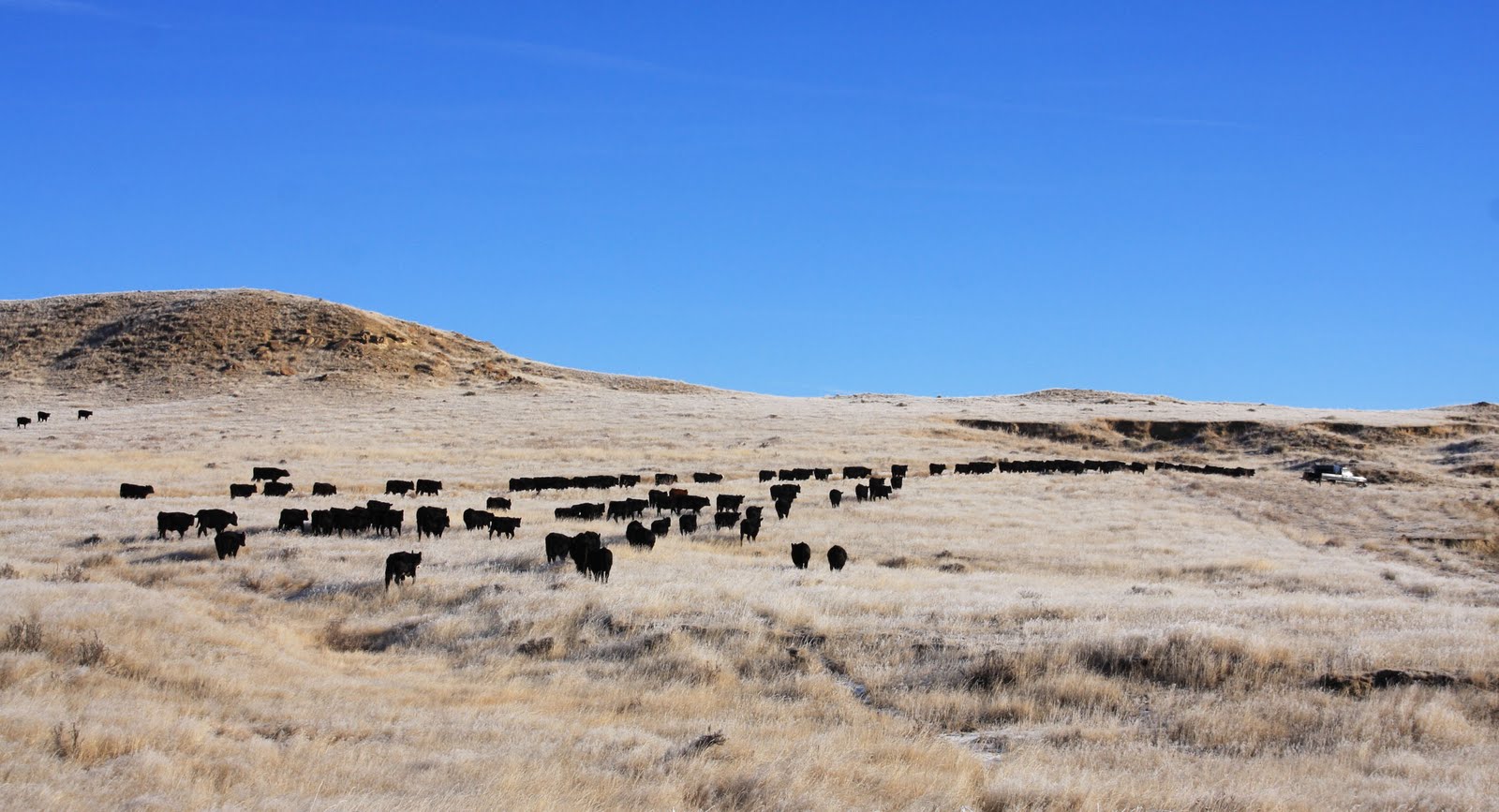
 There have been countless conversations held in feed pickups in locations like this one. In depth discussions on how the calves look, how they compare to last years, what we like better, what we like less, which ones are outstanding, which ones will never be outstanding, and the reasons behind those two distinctions.
 We talk about the condition they're in, what we will do with them the next spring. We get antsy if we've seen them every day, because that makes it harder to see that they're growing. If one of us hasn't been home in a while, someone will almost always suggest, first thing, that we get down and look at the calves to see if we think they're growing, in good condition, etc... We pay constant attention to every little detail, myself on a more individual basis, and the rest of my family on a more group-wide basis. These calves are the most current representation of the genetic selections we've made, and they set the bar for the years to come.
 Then there our yearling heifers. You think we spend a lot of time looking at and analyzing our calves, you should see us with our yearling heifers. These girls represent the most current genetics in our breeding herd, and we work really hard to make them the best they can be genetically and physically. People tend to select items they find eye appealing, and cattle are no different. These heifers represent decades of selecting for very specific female traits, and it shows. We like them, and that's a good thing, because they will hopefully be in production in our herd for the next decade.
 However, one interesting thing on our operation is that my dad and brother have a different "eye" for cattle than I do. They like, long, extended females that are smooth, elevated and distinctly feminine. I like those too, but I tend to prefer stout, thick females over really long, smooth ones. In my opinion this difference in preference helps us select better cattle, because we all choose our replacements together, and they have to pass inspection by all three individuals.
 One result of this strict selection criteria is our heifers are much thicker today (my influence) than they used to be, but they have also maintained their length and femininity (my dad and brother's influence) for the most part. This has all been done without compromising things like low birth weights, fertility, fleshing ability, and other important traits to our operation.I believe you can have cattle that do it all, and we select cattle based on that principle. My opinion is that you can produce a moderate, feminine, fancy cow out of a terminal sire, who will raise low birth weight, high growth, good looking steer calves, or moderate framed, adequate milking, easy fleshing, fertile and fancy heifer calves. This is what I expect out of our cows...
 ..who are looked at based on their calves performance more than anything. As I've mentioned, there are my "cows of note," but we try not to judge a cow on her cover, and rather on how her offspring perform. She was selected on her personal looks as a calf or yearling, and from that point on it's about her calves. We expect our cows to work for us, and if she doesn't pull her weight, she's in trouble, especially on years without a lot of excess grass.
 It's a constantly changing picture, and as I mentioned before a unique and challenging job and lifestyle choice that involves so many variables it's hard to explain. It's a job that knows no vacations, down time or room for error. To do it successfully you have to know about economics, technology, biology, chemistry, nutrition, livestock production, genetics, marketing, reproduction and animal health and welfare. Along with all that, you still have to understand cattle and have the ability to look at them and know any number of things. You have to know about soils, water, plants and weather patterns.It's fascinating and difficult and it keeps my mind occupied and challenged, and I love every minute of it.
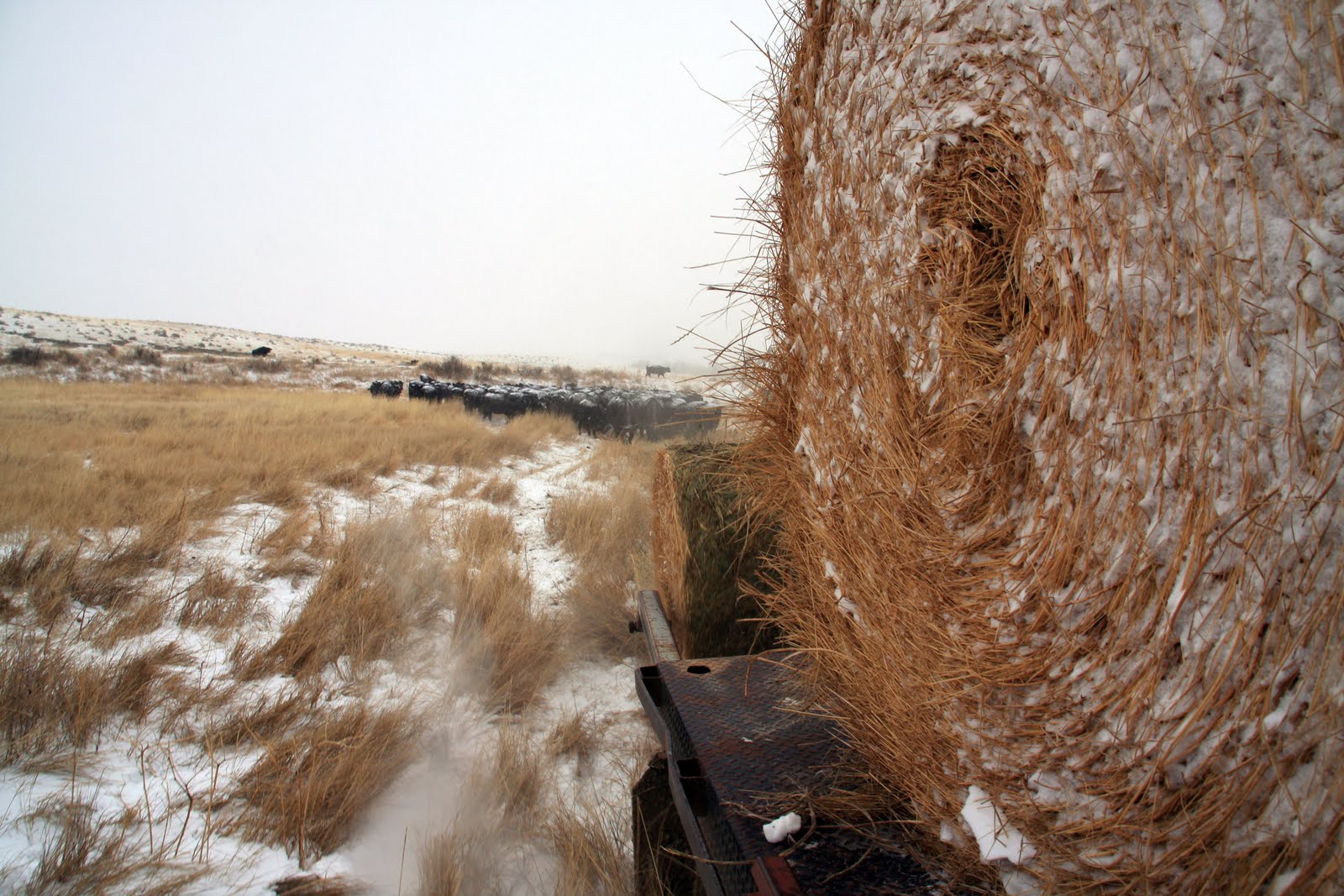
I had a weekend brimming with activities planned, and the bad weather has put a halt to all of them. Originally I was considering going to the Bucking Ball in Gillette tonight, then heading to Cheyenne for Liz's bachelorette party. But, the entire state of Wyoming has slick roads, with some closures and several listed as no unnecessary travel. So I am at my parents tonight, settled in with milk and cookies, preparing to switch to whiskey and partake in a few games of cards. I'm thrilled to be spending more time with my family, but I'm also disappointed I am missing these events, especially Liz's party. Here's what we did today, before settling in by the pellet stove. We fed more of our grass hay to our calves and yearling heifers.

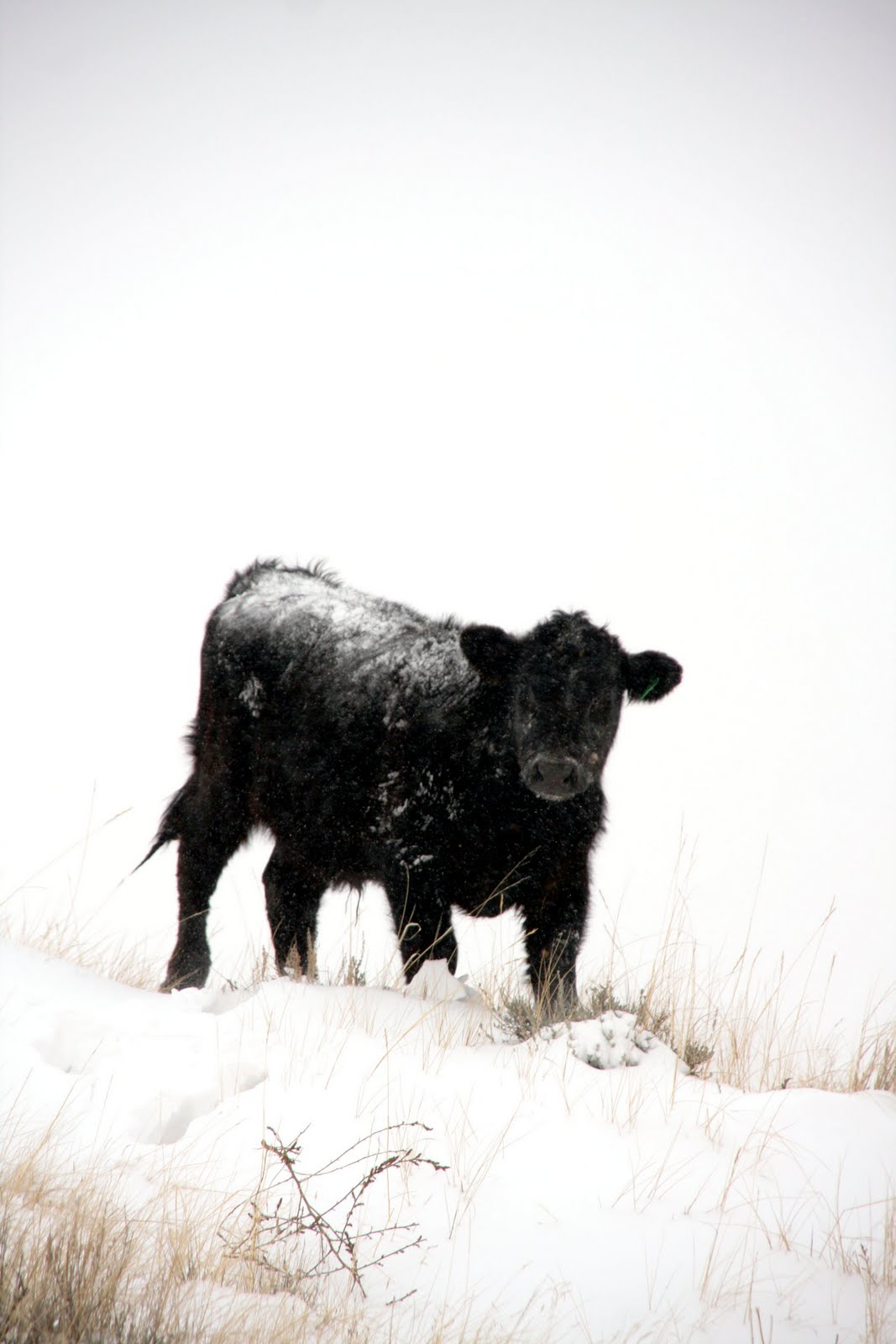
 All that snow on their backs means they are in good shape. The fat on their backs is insulating them against the cold snow, so it sits on their hair, and they stay warm internally. If they are thin, more of their body heat escapes, and melts the snow.
 We tucked them in behind this hill, out of the wind.

 Then we chopped more ice. It was about zero here this morning. Those railroad ties on the ground prevent the cattle from dragging all the dirt away from the tank.

 Now our calves can eat, drink, and be merry as they ring in the new year!
 Then we did the same thing for our yearling heifers.
 After completing all the outdoor chores, my parents drove into Lusk for a funeral. Holly and I baked cookies and a cherry crisp this afternoon. My brother just left, without much heads up, for the Bucking Ball (I might have gone with him had I known), and the rest of us are sitting around staying warm.Hope you all have a fun and happy introduction to 2011!

 One difference is they calve their cows on an irrigated circle, as opposed to out in big pastures. That's the center pivot in the back of the above picture, which is what applies the water to the crop (alfalfa and grass in this case). Irrigating makes land much more productive, and is something I know very little about, as there is no irrigation where I'm from.
 Anyway, at this place a cane is used to grab calves, then maneuver them into this sled. This is much easier when calves are younger and less coordinated, just like tagging is where I'm from.
 A chain is secured around the calf's neck, much like a dog collar. This prevents the little guy from trying to jump out, and potentially hurting himself or getting away.
 Then you pull the sled with a 4-wheeler to the pair pasture. Ideally the cow follows along, like here. (I had to use pictures from a few different trips to get the whole process, hence there being both red and black cows)
 Upon arrival, the calves are tagged, banded, and given their shot. Just like where I'm from, tag, gender, and mother information is recorded in a book for future reference. Ranchers actually keep an incredible amount of data on their livestock, crops and daily activities.
 This isn't always a job for the faint of heart, and since calves are handled so much more than where I'm from, (we don't touch a cow's calf until branding, when he's a couple months old) cow disposition is a really big deal for this operation. This guy doesn't want to get run over every time he leans over the sled to tag a calf.
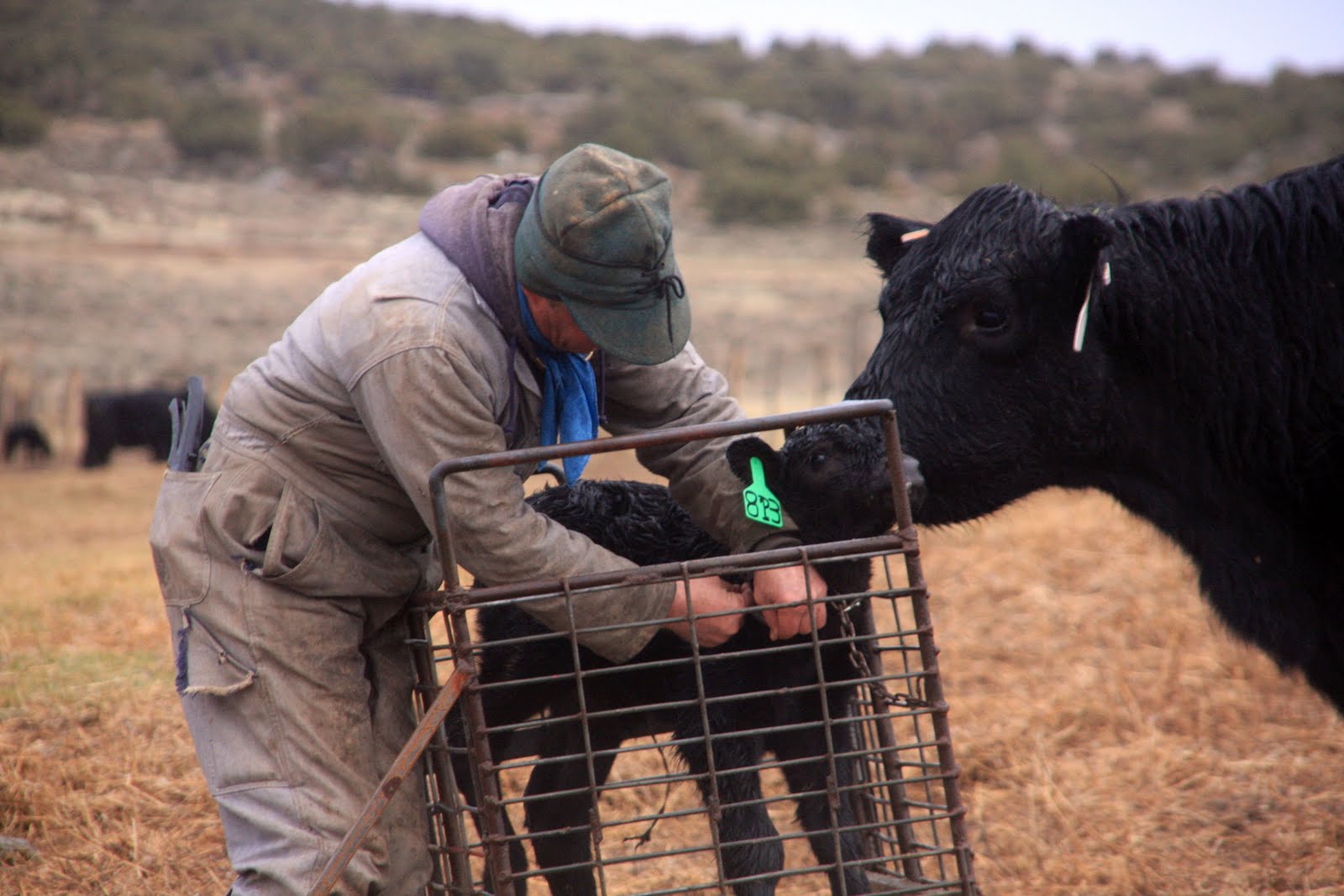 But, it's a fine line in many ways, because he still wants his cows to be good mothers. Most of them stay very close and keep a good eye on the proceedings. This cow also bellowed and blew a little snot a couple times.
 After everything is done, the calf is released from the sled. He bands bull calves at this time because he's already handling them, and it will make branding day go faster, as there won't be any bull calves to castrate. It's always about maximizing efficiency in whatever ways possible.
 You always want to keep one eye on the mother cow, who is right in the middle of the whole process.
 If he couldn't get it banded while in the sled, he finishes that up, then the calf is released.
 Except for a miffed mother, no one is the worse for wear, and this calf's chances of getting scours is greatly reduced through these management practices.
 The pair joins other newborn calves, and we go back for another one after everything is recorded in the book.