That's right folks, at my Wyoming Farm Bureau Legislative Meeting earlier this week, Wyoming Representative Cynthia Lummis told us some very interesting news - The Endangered Species Act (ESA) expired, as in lapsed, 17 years ago!
To say she had a captive audience at that point in her talk was an understatement.
So, why are we still dealing with it? Because, the Appropriations Committee and leadership in general in Washington D.C. continue to fund it. As long as a program is funded, it continues to operate just as written, despite being expired.
I am not kidding.
So, for 17 years, the ESA has continued, based solely the fact that it had the money to do so. As Rep. Lummis noted, continuing funding for programs that are expired provides no stakeholder incentive to come forward and help reform the program. As a result, we cannot get the ESA eliminated, or at the very least changed to meet its original focus in modern times, as long as it continues to be mindlessly funded without intent of reform.
What can we do? Spread the word, and talk to our senators and representatives! Call, email, attend a local hearing or meeting and let them know how wrong that is.
If I remember correctly, Rep. Lummis stated that $9 billion annually is funded to programs whose authorizations have expired, under the Appropriations committee alone!

Showing posts with label agriculture issues. Show all posts
Showing posts with label agriculture issues. Show all posts
Friday, February 22, 2013

Tuesday, February 12, 2013
Agriculture in Arizona

I am in the airport, on the way home from the the AFBF Young Farmer & Rancher Annual Leadership Conference, which was held in Phoenix, AZ over the last three days. If you ever get the chance to attend this event, I cannot recommend it enough. I've been two years in a row, and it has been one of my all-time favorites each time.
We had roughly two and a half days of meetings, speakers, networking meals and the collegiate discussion meet to keep us occupied. There will be more coverage of that in the publications I write for, and hopefully on here as well in upcoming weeks.
On the last day, we toured local agriculture operations. On my tour we went to a dairy that has 28,000 animals, 8,000-9,000 of which are milking cows (the rest are the calves and yearlings that aren't milking age yet). We also went to the place that provides places like Hobby Lobby and Pottery Barn with much of their plant based home decor items, like wheat wreathes. Our last stop was a college ag research center, where we saw a cotton gin built in the 1930's process cotton. Very cool!
Here is a quick rundown of some other things I learned about agriculture production and issues in AZ:
- They get 8-10 cuttings of alfalfa a year! Their major markets are local dairies, like the one I visited.
- One man said if he pulls out of his field and gets mud on the highway, there is a first-time fine of $10,000, and after that it goes to $20,000 per fine.
- Dust regulation is also a big deal, and when the wind blows the sand around (it is a desert...) they call the farmers to let them know they're creating too much dust based on what their daily allotments are.
- It costs $50 per acre foot of water, if you have a water right. People either have water rights or don't, depending on whether they farmed during specific years in the 1970's, or not.
- The area around Phoenix gets 8 inches of moisture a year, in about two storms most of the time. If you raise a crop, you irrigate it.
- Irrigation water comes from captured snow pack runoff and from collecting water during the major storms bringing the land it's annual precipitation.
- The first single row cotton picker could pick 9,000 lbs. of cotton a day. The best human worker could pick between 400 and 450 lbs.
- If you see illegal aliens in southern Arizona, and they're in a row walking along, that's called a mule pack. If they have little backpacks, they're probably alright. But, if they have big backpacks, they're likely each full of 100 pounds of marijuana or cocaine, and there will be people at the front and back with machine guns that will kill you.
- Our local Arizonan on our tour bus said these illegals coming through have completely destroyed the landscape in very southern Arizona, littering it with trash and making ranching dangerous and nearly impossible.
- One major reason for not putting up a more permanent fence (our local said its old, three-wire barbwire with no border markings in most rural areas) between us and Mexico is because a few herds of antelope and elk travel back and forth, and the government doesn't want to eliminate their connectivity. This also results in cattle between the two countries mixing regularly.
- On nights will full moons, cattle pots of illegals will be dropped at the border, and walking across. Don't go hunting or cow gathering when there's a full moon.
- If you get caught in Mexico with a gun, it's so many years in prison for each bullet in your gun. And their prisons are known for their "great hospitality." Hello America....
Monday, December 3, 2012
How About that Election?
Yes, the presidential election. I realize it did happen a while ago, but seeing as how the impacts of it will likely last at least through my lifetime, and quite possible beyond, I feel as though it's worth mentioning...now that I've had time to think about it.
I maintained my puzzlement that has been in place the last four years throughout this election on how someone such as Barack Obama ever got the opportunity to run, much less be elected. Then, bam, he is elected again. Well crap. Not that Romney was a home run Republican candidate in my book, but then again I was one of those people of the opinion that just about any candidate would have been a better bet than our current president.
But, reality check, he is here to stay for the next four years, with his cabinet of cronies, vacation loving wife, lack of business experience, and socialist mindset.
I guess what has given me most pause since the election got over was the sheer impact this particular election had for our country in my opinion. It is the first time the American people have willingly gone with a socialistic candidate. I mean, the first time around they weren't sure how Obama would really pan out, but this time they knew all about his spread the wealth mentality, and they voted him in again. To me, this is a pivotal, conscientious turning point for us away from our roots of working for what is yours to the more socialist ideal of working toward the common good.
Oh goody.
What makes me think even more is the role my generation played in the election, how many of them there are and how long they will be voting. They truly cannot think beyond subjects such as him saying he will pay for their college education. Perhaps if they did they would realize that means they will have to pay for someone elses, with inflation, at some point in the future, and it will cost more than just paying for their own would have. They also do not think of the fact that small businesses foot the majority of America's bill - that's just how it is. And, if they're busy paying for your college education today, they will not be able to pay you a salary for a job tomorrow. I could go on, but you already are either cheering me on or calling me an idiot.
But, as with any time of great challenge and change, there is also great opportunity. I think this is particularly true for agriculture. Sure, there are going to be some big bumps for us, no doubt there. I've already heard speakers talk on the impact of not having a farm bill, the estate tax is a real killer (haha), the rules and regulations are astronomical and ridiculous and not slowing down, and the environmentalists are already gobbling up their insane portion of government money and our time.
But, all people, regardless of how they voted, will still have to eat.
Perhaps we could only send our food to those who voted our way...hm...that would be educational for them.
Anyway, back on track. As rough as it's going to get, and I am one who believes we haven't seen anything yet, I also believe our industry is in a unique position. We have a basket of goods and services that are necessary. We do not produce a want, we produce a need. Plus, we do an exceptional job of producing that need. To me, that is the best form of job security and something to capitalize on in the upcoming months and years.
So, while we are certainly in new and uncharted territory politically, in a negative way, ultimately God is still in control, and that is comforting. I can relate to those who are incredibly upset, and actually think it's a good thing that people have strong opinions about political events. That's much better than not caring in my opinion. I realize some go about it in ways most of us wouldn't, but hey, HSUS also goes about things like we wouldn't, and they get a lot of attention and backing.
The current political situation is certainly not ideal, and definitely a challenge, but I believe it is something we can handle as an industry...so long as it rains, which politicians don't control (thank goodness). I also wonder if perhaps God wanted all the farmers, rancher and small business owners to pray more in the upcoming years.
Wednesday, August 22, 2012
This Industry
I've interviewed 12 people over the last few days, and visited with several more on the route that lead to those interviews. I've heard the personal accounts of how people across the western states are planning, working and striving to make it through this tough year, how they're recovering from the devastating fires that swept so much of the country in recent months and what their strategies are to survive what are sure to be more challenging months, and possibly years, ahead.
On a year that is setting record high temperatures combined with record low moisture, when the United States Department of Agriculture (USDA) publishes its support of meatless Mondays, when other government agencies including the Forest Service are telling producers in some areas that they won't be able to graze their permits next year either as a result of a fire that burned their permits this year, when corn is shooting through the roof and politicians are continuing to support its use in ethanol production (which costs more to produce than it makes in return...wonder why we're in a budget deficit), when the USDA is reducing meat in school lunch programs, when certain species of wildlife are placed at a higher value than livestock by the public, and when over a million acres have been burned in western states alone, killing thousands of head of livestock, wiping out homes and entire operations in some cases, I saw yet again what makes our agriculture industry so unique, wonderful and powerful in my opinion: God and the farmers and ranchers themselves.
There was resilience, hope, humor and grit surrounded by a solid belief in the Lord amongst the people I spoke to. It's humbling to visit with such people, who in a matter of minutes made my family's situation this year look plumb rosy in multiple instances. There were the stories of help provided by friends, family, acquaintances and in several cases those people who use private lands for recreational and hunting vacations. There were the stories of the sheer workload being taken on by landowners to recover from the effects of 2012, and the fact that I never heard any hesitation, complaints (except for how the government fights fire, which I agree with wholeheartedly) or excuses. Instead, I heard about action, plans, ideas, innovations and answered prayers. I also heard about continued prayers for those who did have to sell out and regroup. People spoke of how good we have it today compared to the 1980's or 1930's. Miraculous moments that occurred during some of the fires were explained, as was how the western cowherd is going to be fed this winter, not if. There was a resigned willingness to dig in and survive, come what may, combined with the ever-present hope you'll always find in agriculture that the weather will become perfect starting tomorrow and the government will back off, and that prices will reach a level we all have in the back of our mind. We are, and always will be the most optimistic pessimists, or most pessimistic optimists, you'll ever meet.
I am proud to not only be a part of this industry, but to be a part of its core; which are the people who raise the food and fiber that feed and clothe the world. The fact that I get to do a part in sharing the stories, ideas and news relevant to agriculture is just a bonus, and this has been a great week on the job for me!
Sunday, August 12, 2012
Good Reads
I've come across some great blogs and posts lately that are telling people about agriculture in various forms. I always enjoy reading what other people have to say, and these people are doing a great job! A couple of these sites have also featured my posts and one featured me as a rancher, which was very nice of them.
So, if you're looking for a good read over the weekend, here's what I've enjoyed reading lately:
Hoosier Farm Babe Tell Tail's post on hog gestation crates, found here. Hog people are always getting slammed on their use of gestation and farrowing crates by people who have no understanding of raising hogs, and this was a great response to the benefits of using them. Very interesting, and I have no doubt that what I learned reading this post will come in very handy at some point.
High Heels & Shotgun Shells post on educating the misinformed, found here. She shows a response to a CBS article on the drought in Arkansas that was written by someone who obviously dislikes our industry tremendously. It's important to see what these people are saying, what their opinions are, and how they respond to anything ag-affiliated. Check out what this radical commenter said, and her response. Go respond to the article yourself if you're so inclined. She has a link to it included in the post.
Have you seen the Faces of Agriculture blog? I think this is best idea - the ladies running this blog send you some questions, then compile a feature blog post with your answers and photos. The idea is to show a more personal side of the agriculture industry through introducing readers to individuals. They've featured farmers, ranchers and other ag-affiliated folks from all over the country. Here's the link to their post on me. When you're done, be sure to click on home to see all the more recent posts. They are also always looking for new people to feature on their blog, and their contact information is available on their page.
If you're interested in reading more about agriculture in Wyoming, I highly recommend the RealRanchers site. A good friend of mine heads this project of telling the story of Wyoming agriculturalists through social media, and she does a great job! You'll see a few of my blog posts on the site, in addition to posts from other Wyomingites on numerous topics. Always a great stop
Sunday, June 10, 2012
YF&R Washington D.C. trip
I did end up going to D.C. for a quick couple days of meetings and tours with the Wyoming Farm Bureau Young Farmers and Ranchers. This was my fourth time going to the nation's capital. This round included meeting with the Department of the Interior, where I asked why the BLM does not maintain the same grazing standards they require of their permittees, especially in areas grazed with wild horses. We also talked about wolves, sage grouse and the Endangered Species Act, trailing permits across public lands, and the issue of disease transmission between domestic and Bighorn sheep.
The Brazilian Embassy was an interesting stop where we learned a lot about agriculture in the Brazil. Specific topics included Foot and Mouth Disease, their ethanol industry and international trade. Their ethanol industry, which uses sugar, was started out with government subsidization. Today it is not government subsidized, and the price of sugar on the open market is higher than the ethanol price, so people rarely use it because of the cost compared to regular gasoline.
Touring the American Farm Bureau Federation Office was also very fun, and we got briefed on several topics of interest/concern within the Farm Bureau organization at present, and see the rooftop view of the Capital.
My last stop was with our Senator, John Barrasso. We're very fortunate in Wyoming to have a great Congressional Delegation, so it was more a thank-you/what's new on issues meeting. From there I flew home to continue on with sorting and shipping while the rest of my group spent a couple days touring our nation's capital.
Here are a few photos from the trip:
 The U.S. Capital at night.
 American Farm Bureau President Bob Stallman's office, and the great view!
 The Air and Space Museum, exhibit on the race to the moon between the U.S. and Soviet Union. Check out the newspaper articles (writer's plug, lol)
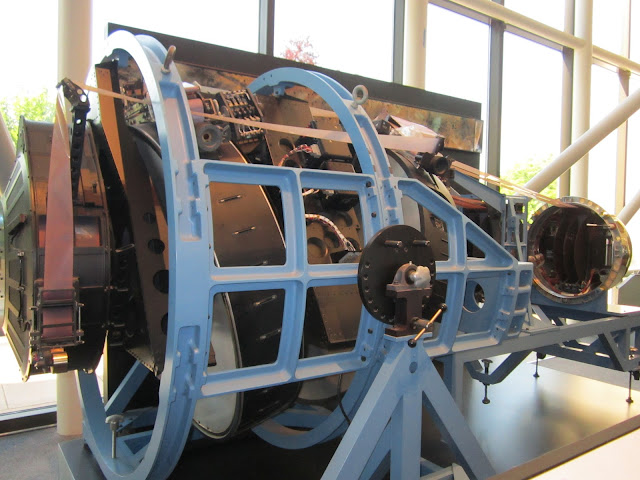 The super cool, super big camera America launched into to space to spy on the Soviet Union in the late 1960's or early 1970's to see if they were planning and making nuclear weapons (I think). Within a couple years, we perfected this camera from only being able to see items over 40 feet in length, to being able to see a line of people on the street. Very interesting, loved this museum!
 Real airplanes hang from the rafters in the Air and Space Museum.
 Another angle on the Capital.
 Here I am....I'm really not that orange : )
 View from the Capital Steps
 Sitting on the Capital Steps, listening to the Navy Band play, at sunset.
 Enjoying the Navy Band.
 Here is the whole group that went. We had a great time!
The Brazilian Embassy was an interesting stop where we learned a lot about agriculture in the Brazil. Specific topics included Foot and Mouth Disease, their ethanol industry and international trade. Their ethanol industry, which uses sugar, was started out with government subsidization. Today it is not government subsidized, and the price of sugar on the open market is higher than the ethanol price, so people rarely use it because of the cost compared to regular gasoline.
Touring the American Farm Bureau Federation Office was also very fun, and we got briefed on several topics of interest/concern within the Farm Bureau organization at present, and see the rooftop view of the Capital.
My last stop was with our Senator, John Barrasso. We're very fortunate in Wyoming to have a great Congressional Delegation, so it was more a thank-you/what's new on issues meeting. From there I flew home to continue on with sorting and shipping while the rest of my group spent a couple days touring our nation's capital.
Here are a few photos from the trip:


Tuesday, May 8, 2012
HSUS Targets Wyoming Pig Farm
The Humane Society of the United States (HSUS) is at it again with another undercover video allegedly shot at a Wheatland, Wyoming pig farm. I just watched it, and there were instances were handling the hogs wasn't done appropriately. I am saying this as a person who just watched an extreme video, not someone who was actually present at the facilities and was involved in the entire situation the video shows quick blurbs of. I'm also not condoning or defending the people and actions shown in the video as they were mistreating the animals in some of the scenes.
I did also notice a few things that I'm guessing are in the animal's best interest. One example is they showed a sow with an iron ring holding her mouth still, and she was naturally squealing. The video then showed her feet being roped, and her being laid on her side while a voice talked about hurrying to pull the piglets (or something like that). It appeared the workers were trying to help that sow deliver her babies, and had her mouth controlled because a sow weighing several hundred pounds knows how to use her head and teeth on humans. Especially when she's in labor, I'm guessing. That wasn't to hurt her, it was to prevent injury to the people who were helping her deliver her litter of piglets, and to keep her piglets alive and her from suffering any health related issues that would arise if she didn't deliver them (like death...)
Furthermore, I noticed several situations that likely occurred despite any management efforts, like a prolapsed sow. Prolapses just happen, and nobody purposely makes them happen, or can do anything in advance to prevent an animal from prolapsing. The video says she was allowed to live like that for several days, but do we really know if that's the case based on a 3 second blip - no.
It also showed a dead baby piglet in the aisle, with the placenta over his head. This means he died at birth because he couldn't get oxygen, not that someone killed him or beat him. Unfortunately that happens within seconds following birth, and can occur even when you're watching things super close.
Then there was the mother pig eating the dead piglet, which is a perfect example of why sows who are about to farrow (have their piglets) are put in small pens (farrowing crates) where they cannot move around a lot. Some sows will kill their young intentionally, and others will accidentally lay on and accidentally suffocate them. As can also be seen in the video, when a sow is in farrowing crate, there are bars on the back and at least one side that are spaced so the piglets can walk under them. They are a certain length so the piglets are born out the back of the pen, and therefore as the sow continues to deliver her young and move about, she doesn't squish those who have already arrived. Through the bars on one side will be a heatlamp and some straw to keep the piglets warm and safe. Then they can move back under the bars to drink their mother's milk. Farrowing crates are carefully designed for the comfort and safety of both mother sow and baby piglets, and are a temporary pen for the sows during late pregnancy and labor.
One blaring question continues to burn in my mind whenever I watch one of these undercover videos: If the person shooting the video truly cares about animals, how can they simply allow mismanagement or neglect to continue while they film? The HSUS folks are all about attacking animal agriculture, not actually helping the few animals and situations they are able to find where everything is not taken care of in a top notch fashion. To me there is no better example of this than the videos they shoot, edit extensively, add music too, then release in dramatic fashion days, weeks, months (does anyone know the turnaround time?) while the same animals may be in need of help. That puts them at the same level as the person doing the actual abuse.
Here is what the attacked farm had to say in response to the video, and the undercover spy:
I take these allegations seriously. I am disappointed I did not hear them directly from Whitney Warrington while she was working on our farm so we could have addressed any concerns immediately. We take the pork industry’s We Care initiative seriously and are committed to the well-being of all our animals and to the safety of our workers.
Hopefully Mr. DeRouchey takes care of the problems present in his operation immediately and the final result of this is improved handling and management of the hogs, and hopefully HSUS's delight in releasing a shocking video instead of taking immediate action didn't result in any more hogs being mistreated during the interim.
I did also notice a few things that I'm guessing are in the animal's best interest. One example is they showed a sow with an iron ring holding her mouth still, and she was naturally squealing. The video then showed her feet being roped, and her being laid on her side while a voice talked about hurrying to pull the piglets (or something like that). It appeared the workers were trying to help that sow deliver her babies, and had her mouth controlled because a sow weighing several hundred pounds knows how to use her head and teeth on humans. Especially when she's in labor, I'm guessing. That wasn't to hurt her, it was to prevent injury to the people who were helping her deliver her litter of piglets, and to keep her piglets alive and her from suffering any health related issues that would arise if she didn't deliver them (like death...)
Furthermore, I noticed several situations that likely occurred despite any management efforts, like a prolapsed sow. Prolapses just happen, and nobody purposely makes them happen, or can do anything in advance to prevent an animal from prolapsing. The video says she was allowed to live like that for several days, but do we really know if that's the case based on a 3 second blip - no.
It also showed a dead baby piglet in the aisle, with the placenta over his head. This means he died at birth because he couldn't get oxygen, not that someone killed him or beat him. Unfortunately that happens within seconds following birth, and can occur even when you're watching things super close.
Then there was the mother pig eating the dead piglet, which is a perfect example of why sows who are about to farrow (have their piglets) are put in small pens (farrowing crates) where they cannot move around a lot. Some sows will kill their young intentionally, and others will accidentally lay on and accidentally suffocate them. As can also be seen in the video, when a sow is in farrowing crate, there are bars on the back and at least one side that are spaced so the piglets can walk under them. They are a certain length so the piglets are born out the back of the pen, and therefore as the sow continues to deliver her young and move about, she doesn't squish those who have already arrived. Through the bars on one side will be a heatlamp and some straw to keep the piglets warm and safe. Then they can move back under the bars to drink their mother's milk. Farrowing crates are carefully designed for the comfort and safety of both mother sow and baby piglets, and are a temporary pen for the sows during late pregnancy and labor.
One blaring question continues to burn in my mind whenever I watch one of these undercover videos: If the person shooting the video truly cares about animals, how can they simply allow mismanagement or neglect to continue while they film? The HSUS folks are all about attacking animal agriculture, not actually helping the few animals and situations they are able to find where everything is not taken care of in a top notch fashion. To me there is no better example of this than the videos they shoot, edit extensively, add music too, then release in dramatic fashion days, weeks, months (does anyone know the turnaround time?) while the same animals may be in need of help. That puts them at the same level as the person doing the actual abuse.
Here is what the attacked farm had to say in response to the video, and the undercover spy:
The video of a Wyoming Premium Farms sow barn posted online this morning by HSUS shows some practices that are not and will not be tolerated. The owners and managers of the farm are investigating the incidents shown in the video and wish to assure everyone we will take action to correct all problems and to deal appropriately with any employees that were involved.
I was first made aware of the situation when I was contacted on Friday by the Wyoming Livestock Board regarding a video the board had received. On Monday, I drove to Cheyenne to meet with the board and to view a video from the HSUS. Evidently, HSUS had placed an undercover spy in our workforce.
I was told that the undercover spy had pointed out certain items that she had noticed while working there to different people at the farm. However, never once did she express any concerns to me, the general manager and the person responsible for hiring her.
The video I saw at the Wyoming Livestock Board yesterday was troubling, but it did not contain some of the disturbing scenes shown in the video HSUS put online this morning. While still sitting at the Livestock Board’s conference table on Monday, I called the farm manager and asked him if he was made aware of comments from the employee we knew as Whitney Warrington. He said because she was new she always seemed to have new-person type of questions. He said he could not recall everything she said, but added he definitely would have remembered if anything about animal abuse had come out of her mouth.
After my meeting in Cheyenne, I contacted the farm managers and instructed them to conduct a meeting immediately to once again stress with our workers the importance of animal welfare. I then contacted our consulting veterinarian and asked him to join me for an unannounced herd visit. That visit occurred this morning. Our veterinarian also suggested we retain an independent 3rd party to review everything we do on our farm to give us comments and recommendations. We are doing that.
I take these allegations seriously. I am disappointed I did not hear them directly from Whitney Warrington while she was working on our farm so we could have addressed any concerns immediately. We take the pork industry’s We Care initiative seriously and are committed to the well-being of all our animals and to the safety of our workers.
Once again, we will swiftly address any problems that are identified.
Doug DeRouchey
Here is a link where the video can be watched, and additional statements found.
For those not familiar with HSUS, you can read about how they spend the dollars raised from videos like this one and through other extreme fundraising efforts here
Thursday, April 26, 2012
DOL Child Labor Law Withdrawn!
Today the Obama Administration and the Department of Labor withdrew their proposed child labor law, which would have significantly limited what farm and ranch work a person under 16 years of age could participate in. This is a HUGE win for agriculture and rural communities across the country!!
The Labor Department's statement:
“The Obama Administration is firmly committed to promoting family farmers and respecting the rural way of life, especially the role that parents and other family members play in passing those traditions down through the generations. The Obama Administration is also deeply committed to listening and responding to what Americans across the country have to say about proposed rules and regulations. As a result, the Department of Labor is announcing today the withdrawal of the proposed rule dealing with children under the age of 16 who work in agricultural vocations. The decision to withdraw this rule – including provisions to define the ‘parental exemption’ – was made in response to thousands of comments expressing concerns about the effect of the proposed rules on small family-owned farms. To be clear, this regulation will not be pursued for the duration of the Obama Administration. Instead, the Departments of Labor and Agriculture will work with rural stakeholders – such as the American Farm Bureau Federation, the National Farmers Union, the Future Farmers of America, and 4-H – to develop an educational program to reduce accidents to young workers and promote safer agricultural working practices.”
How much of this is genuine concern over the nation's reaction to the proposed rule, and how much is election year hype, is a little questionable. But, at least it happened. I was thrilled to hear it, and sincerely hope they meant what was said about not ever pursuing it again during the Obama Administration.
Yay for good news on the political front! Hasn't been a whole lot of that recently. Also a huge thank you to all the people who wrote comments, contacted their elected officials, worked on the political front lobbying against it, worked on it through their careers, or helped in any other way!
I'm so glad I won't be breaking the law when I make my kids work someday.
Wednesday, April 25, 2012
BSE Buzz
If you haven't heard, there was a dairy cow who tested positive for BSE (Bovine Spongiform Encephalopathy), also called "Mad Cow Disease" (whoever called it that must have been mad themselves) in California this Tuesday.
A few things to keep in mind about this:
1. This cow was found during targeted testing and surveillance, which ultimately means our system is working! She was never anywhere near our food supply, and there is no risk to human health. USDA was on top of things, and their surveillance and testing system worked as designed.
2. BSE is not contagious through milk or beef. It's a neurological disease. I'm still eating meat and drinking milk and am not concerned. At all.
3. This is an atypical form of BSE, which is another positive because it means the cow didn't contract the disease through her feed source.
4. Our industry is on top of responding to this issue in a positive and informative light, which helps get the accurate and factual information out there for everyone who may not know about BSE, and who may have concerns after hearing the news of the infected cow.
The video below is one such example. USDA's Chief Veterinarian answers questions regarding the BSE case, the safety to consumers, livestock and our country's trade position
Here are a few additional resources you can check out to learn more accurate information about BSE.
BEEF Magazines BSE information compilation page
BSE Information website
Tuesday, March 27, 2012
Lean Finely Textured Beef, NOT pink slime
Have you heard the pink slime buzz that's been going on for the past several weeks? I have a little (how could anyone miss it all) but have been pretty caught up on calving.
Above is a great video that tells the real story on what is really Lean Finely Textured Beef, not pink slime.
I'm embarrassed for mainstream media, who got it so very wrong.
Thursday, March 8, 2012
DOL Child Labor Law Revisions
Chad, from Texas, emailed me and asked if I would let you know what I know on the Department of Labor's (DOL) proposed changes to child labor laws. In case you don't know what I'm talking about, here is a link to what the DOL is proposing.
Or, in case you skip the link, here are some of the proposed changes:
The proposed updates include:
What I know may not be any more than you know on this subject, which is incredibly serious and potentially life threatening to many farms and ranches across this country. Basically, this is another attempt by our government to over-regulate its citizens so that they can drag us down to their preferred level of mediocrity through controlling our ability to work. It is ridiculous, frustrating, and completely shocking to me that anyone would even consider proposing these changes.
If you aren't familiar with agriculture, allow me to make a couple points. First, the family structure on a farm or ranch is rarely kids and their parents. It typically involves cousins, aunts and uncles, grandparents, distant cousins, and neighbors who you might as well be related to. Part of the proposed rule would limit a youth's ability to work with anyone but his parents, and maybe grandparents, on a farm or ranch.
Second, tasks like not being able to drive a tractor, not coming into contact with a bull, ride a horse, or be allowed to transport raw farm materials is comparable to saying your child may not come into contact with flour until he/she is sixteen if you own a bakery. Literally is at that level of overkill, with about the same amount of reasoning to back it as you can imagine they would have to keep kids out of contact with flour. Actually it is much the same thing, except it's contact with flour before it's in your kitchen.
I recently sat next to a man who is heavily involved in fighting this proposed rule, and he taught me lot on the subject. First, whoever came up with this idea knows something about agriculture, in his opinion. Why? Because they put the proposed rule out for comment on September 2, which is one of the busiest times of the year for America's farmers, and ranchers, in many cases. They knew our industry wouldn't have time to immediately respond as a whole because we were busy harvesting, weaning, etc... So, as we move forward with this, be aware that timely updates, any future comment periods, and other pertinent information is likely to be released at times when farmers and ranchers are exceptionally busy working, ironically enough.
He also said that one thing he hears a lot in D.C. is that it's okay, they aren't really going to enforce these, but just want to have them updated and current. Really, is anyone buying into that??? No. Don't worry, he isn't either.
He and I also discussed just how safe, or unsafe, our industry is to kids. He had a whole pile of great statistics that I cannot remember, or find at the moment. He mentioned that Hispanic youth who are part of immigrant working families are something like 50-75 percent less likely to suffer an injury working on a farm than they are if they move to an inner-city. So, gangs and other kids are far more likely to result in injury than driving a tractor or riding a horse. He also told me that the most dangerous industry for youth to work in based on data is acting.
In response to eliminating youth under 16 from operating almost all power-driven equipment, he quoted that stock car circuits allow youth to compete, at far greater speeds than a tractor ever dreamed of going, at significantly younger ages. In regard to a component that states youth are unable to manipulate cattle from horseback (ie, ride and move cows). His response is that numerous equine breed organizations, in addition to numerous youth organizations, host contests that prove otherwise.
I apologize for not remembering any more of the very interested and well thought out pieces of information this man had to the rule. The key points here are that there is a lot of data showing agriculture is safe for youth to be involved in, a lot of their proposed rules have no precedence when looking at facts and figures, and basically that it's as ludicrous from that viewpoint as it is from the more emotional standpoint producers often take. The man noted that as a part of the American Farm Bureau Federation, he is fighting on the facts and figures side of the fence, and leaving the emotional side of the battle to the producers.
You can read some additional information on how the ag industry feels about this issue at these links:
Article One
Article Two
Article Three
This is going to happen, in some form. The DOL has mostly ignored the thousands upon thousands of comments sent in by agriculture producers around the country. But, I do feel better after meeting one of the men fighting this rule face to face with our country's lawmakers.
As for the emotional side of this, here's my personal take. I grew up on an operation that included my parents, aunt and uncle and grandparents. We had a lot of work to do, and not a lot of help. So, at a very young age my siblings and I worked, and worked hard. We had our own horse, knew how to drive a manual pickup, the tractor and various other pieces of equipment, and held long hours some days. We were competent children that could be sent to complete a task, and would. Our level of success was questionable at times, but it was never for a lack of trying. I didn't just work with my dad either. On any given day I was as likely to be working under my uncle's supervision as my own parents. People also trade work (kids a lot of the time) with neighbors during certain times of the year.
This law, as currently proposed, would have significantly altered my family's ability to run our operation successfully, not to mention the impact it would have had on me as an individual. Those tasks taught me what work ethic really is, how to be self-sufficient, how to plan, implement and complete a task by myself or in a group setting, and how to work under and/or with a variety of people in both calm and high stress situations. A person's youth is the cornerstone to their adulthood, and lessons learned early tend to stick. I find it frightening to think out government doesn't want another generation to know how to work.
What can we do? There is still time to submit comments on specific sections of the rule, and several of the links I've provided have information on how to do that. I would also suggest contacting your state representatives, especially if they are unfamiliar with agriculture, and the impact this will have within the industry. You can also offer support, comments, and in some instances your time, through various ag affiliated organizations, including your state stockgrowers/stockmans groups, your state and the American Farm Bureau Federation (AFBF) and the United States Cattlemen's Association (USCA) to name a few. I know the USCA is currently looking for participants for their latest D.C. Fly-In, where you can travel to our nation's capital and meet and discuss current issues, like this one, with various groups and individuals involved in our government.
If you would like to send me an email at doublehphoto@live.com with your respectfully written thoughts, comments, personal experiences growing up, or anything else relevant to this rule, I will accept them and do a post of what everyone has to say in a week or so. My thoughts are we can't publicize this enough, through enough venues, using enough concerned people, in our attempt to get the federal government to see reason. If a few people do email me, I too will take the time to write up a much shorter something to include in the post.
Hope this helps Chad, and thank you again for writing me in regard to this issue.
Or, in case you skip the link, here are some of the proposed changes:
The proposed updates include:
- Strengthening current child labor prohibitions regarding agricultural work with animals in timber operations, manure pits, storage bins and pesticide handling.
- Prohibiting hired farm workers under the age of 16 from employment in the cultivation, harvesting and curing of tobacco.
- Prohibiting youth in both agricultural and nonagricultural employment from using electronic devices, including communication devices, while operating power-driven equipment.
- Prohibiting hired farm workers under the age of 16 from operating almost all power-driven equipment. A similar prohibition has existed as part of the nonagricultural child labor provisions for more than 50 years. A limited exemption would permit some student-learners to operate certain farm implements and tractors (when equipped with proper rollover protection structures and seat belts) under specified conditions.
- Preventing children under 18 years of age from being employed in the storing, marketing and transporting of farm-product raw materials. Prohibited places of employment would include country grain elevators, grain bins, silos, feed lots, stockyards, livestock exchanges and livestock auctions.
What I know may not be any more than you know on this subject, which is incredibly serious and potentially life threatening to many farms and ranches across this country. Basically, this is another attempt by our government to over-regulate its citizens so that they can drag us down to their preferred level of mediocrity through controlling our ability to work. It is ridiculous, frustrating, and completely shocking to me that anyone would even consider proposing these changes.
If you aren't familiar with agriculture, allow me to make a couple points. First, the family structure on a farm or ranch is rarely kids and their parents. It typically involves cousins, aunts and uncles, grandparents, distant cousins, and neighbors who you might as well be related to. Part of the proposed rule would limit a youth's ability to work with anyone but his parents, and maybe grandparents, on a farm or ranch.
Second, tasks like not being able to drive a tractor, not coming into contact with a bull, ride a horse, or be allowed to transport raw farm materials is comparable to saying your child may not come into contact with flour until he/she is sixteen if you own a bakery. Literally is at that level of overkill, with about the same amount of reasoning to back it as you can imagine they would have to keep kids out of contact with flour. Actually it is much the same thing, except it's contact with flour before it's in your kitchen.
I recently sat next to a man who is heavily involved in fighting this proposed rule, and he taught me lot on the subject. First, whoever came up with this idea knows something about agriculture, in his opinion. Why? Because they put the proposed rule out for comment on September 2, which is one of the busiest times of the year for America's farmers, and ranchers, in many cases. They knew our industry wouldn't have time to immediately respond as a whole because we were busy harvesting, weaning, etc... So, as we move forward with this, be aware that timely updates, any future comment periods, and other pertinent information is likely to be released at times when farmers and ranchers are exceptionally busy working, ironically enough.
He also said that one thing he hears a lot in D.C. is that it's okay, they aren't really going to enforce these, but just want to have them updated and current. Really, is anyone buying into that??? No. Don't worry, he isn't either.
He and I also discussed just how safe, or unsafe, our industry is to kids. He had a whole pile of great statistics that I cannot remember, or find at the moment. He mentioned that Hispanic youth who are part of immigrant working families are something like 50-75 percent less likely to suffer an injury working on a farm than they are if they move to an inner-city. So, gangs and other kids are far more likely to result in injury than driving a tractor or riding a horse. He also told me that the most dangerous industry for youth to work in based on data is acting.
In response to eliminating youth under 16 from operating almost all power-driven equipment, he quoted that stock car circuits allow youth to compete, at far greater speeds than a tractor ever dreamed of going, at significantly younger ages. In regard to a component that states youth are unable to manipulate cattle from horseback (ie, ride and move cows). His response is that numerous equine breed organizations, in addition to numerous youth organizations, host contests that prove otherwise.
I apologize for not remembering any more of the very interested and well thought out pieces of information this man had to the rule. The key points here are that there is a lot of data showing agriculture is safe for youth to be involved in, a lot of their proposed rules have no precedence when looking at facts and figures, and basically that it's as ludicrous from that viewpoint as it is from the more emotional standpoint producers often take. The man noted that as a part of the American Farm Bureau Federation, he is fighting on the facts and figures side of the fence, and leaving the emotional side of the battle to the producers.
You can read some additional information on how the ag industry feels about this issue at these links:
Article One
Article Two
Article Three
This is going to happen, in some form. The DOL has mostly ignored the thousands upon thousands of comments sent in by agriculture producers around the country. But, I do feel better after meeting one of the men fighting this rule face to face with our country's lawmakers.
As for the emotional side of this, here's my personal take. I grew up on an operation that included my parents, aunt and uncle and grandparents. We had a lot of work to do, and not a lot of help. So, at a very young age my siblings and I worked, and worked hard. We had our own horse, knew how to drive a manual pickup, the tractor and various other pieces of equipment, and held long hours some days. We were competent children that could be sent to complete a task, and would. Our level of success was questionable at times, but it was never for a lack of trying. I didn't just work with my dad either. On any given day I was as likely to be working under my uncle's supervision as my own parents. People also trade work (kids a lot of the time) with neighbors during certain times of the year.
This law, as currently proposed, would have significantly altered my family's ability to run our operation successfully, not to mention the impact it would have had on me as an individual. Those tasks taught me what work ethic really is, how to be self-sufficient, how to plan, implement and complete a task by myself or in a group setting, and how to work under and/or with a variety of people in both calm and high stress situations. A person's youth is the cornerstone to their adulthood, and lessons learned early tend to stick. I find it frightening to think out government doesn't want another generation to know how to work.
What can we do? There is still time to submit comments on specific sections of the rule, and several of the links I've provided have information on how to do that. I would also suggest contacting your state representatives, especially if they are unfamiliar with agriculture, and the impact this will have within the industry. You can also offer support, comments, and in some instances your time, through various ag affiliated organizations, including your state stockgrowers/stockmans groups, your state and the American Farm Bureau Federation (AFBF) and the United States Cattlemen's Association (USCA) to name a few. I know the USCA is currently looking for participants for their latest D.C. Fly-In, where you can travel to our nation's capital and meet and discuss current issues, like this one, with various groups and individuals involved in our government.
If you would like to send me an email at doublehphoto@live.com with your respectfully written thoughts, comments, personal experiences growing up, or anything else relevant to this rule, I will accept them and do a post of what everyone has to say in a week or so. My thoughts are we can't publicize this enough, through enough venues, using enough concerned people, in our attempt to get the federal government to see reason. If a few people do email me, I too will take the time to write up a much shorter something to include in the post.
Hope this helps Chad, and thank you again for writing me in regard to this issue.
Subscribe to:
Posts (Atom)